Showing posts with label British cozy mysteries. Show all posts

Friday, April 29, 2016

Poisoning People for Fun and Profit—Part 2: Wolfsbane


Wolfsbane, aka Monkshood or Devil's Helmet (aconitum) is one of the more magical and romantic-sounding poisons. It carries connotations of witch's brews and wizardry. It often appears in fantasy novels and is rumored to turn people into werewolves. 

But it's very real. And very nasty. People can be poisoned by simply touching the leaves of the plant, since it can be absorbed through the skin, and strong enough tincture can cause almost instantaneous death. 

Wolfsbane is also known as Monkshood
The victims appear to die of suffocation, because it causes the heart and lungs to stop functioning. If the dosage hasn't been very high, a victim can be saved if they get treatment within the hour. Charcoal can decontaminate the intestinal tract, and Lidocaine or similar drugs will combat the heart arrhythmia. 

But without treatment, death usually happens within two to six hours. 

The initial signs are nausea and vomiting, followed by tingling and numbness in the face and burning in the abdomen.
 
Aconitum napellum

The numbness then spreads to the arms and legs, and the victim will feel dizzy and confused.

Death is caused by paralysis of the heart and lungs. The only post-mortem signs are the same as asphyxiation. 

The flowering plant is a lovely purple color and grows in moist, shady soil. Over 250 species of it are found all over the world. It belongs to the genus Ranunculaceae and is a cousin of the innocent buttercup.


Wolfsbane is related to the buttercup

Aconite has been used since ancient times, and early Greeks used it on their arrows to kill their enemies more quickly. (The word aconitum probably comes from "akon" the Greek word for "arrow".) In Greek mythology, Medea attempted to kill Theseus using aconite.

The emperor Claudius is said to have been poisoned by his wife, Agrippina, using aconite in a plate of mushrooms, and the Romans subsequently made it illegal to grow the plant.

Aconitum variega

In small doses it also has medicinal properties, and is used in Ayurvedic and Chinese traditional medicine.

The victim in my fifth Camilla book So Much for Buckingham is poisoned with wolfsbane, and because Plantagenet discovers the body—and he had been seen admiring wolfsbane flowers in the nearby garden earlier—he is arrested for the murder. 
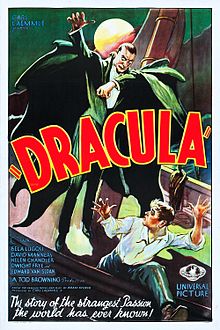
Does it protect you from vampires? 
A docent warns him not to touch it, and hints that it might turn him into a werewolf. But much more mundane horrors are in store.

Wolfsbane is very common—and amazingly versatile—in werewolf mythology. Some stories say the plant can turn people into werewolves and others say it can prevent the transformation. In the Vampire Diaries, wolfsbane protects vampires from werewolves, and in the classic 1931 film Dracula, it's used to protect people from vampires.

Personally, I think I'd rather take my chances with the vampires.


SO MUCH FOR BUCKINGHAM: Camilla Mystery #5


This comic novel—which takes its title from the most famous Shakespearean quote that Shakespeare never wrote—explores how easy it is to perpetrate a character assassination whether by a great playwright or a gang of online trolls.

It's a laugh-out-loud mashup of romantic comedy, crime fiction, and satire: Dorothy Parker meets Dorothy L. Sayers. Perennially down-and-out socialite Camilla Randall--a.k.a. "The Manners Doctor"--is a magnet for murder, mayhem and Mr. Wrong, but she always solves the mystery in her quirky, but oh-so-polite way. Usually with more than a little help from her gay best friend, Plantagenet Smith. n this hilarious episode she makes the mistake of responding to an online review of one of her etiquette guides and sets off a chain of events that leads to arson, attempted rape and murder. 

Sample reviews:
"Delicious wit, wonderful eccentric characters, and a beguiling plot. Camilla Randall is a delight!"...Melodie Campbell, "Canada's Queen of Comedy."

"Both a comedic romance and a crime suspense thriller, it presents the 'Perils of Pauline' adventures of a modern author, Camilla, whose mad-cap follies are hugely entertaining. But the novel has a serious undertone of social comment. Even the craziest of its zanies have their counterparts in the real world and the author faithfully depicts their grim, and often deadly, sub-cultures behind a veneer of knockabout wit. Highly recommended for anyone who enjoys romance, and crime suspense, with a lethally satiric edge." Dr. John Yeoman.

"Anne Allen's ability to weave throughout her stories a current social commentary easily and throughout the story amazes me. She does this without jeopardizing her plot or her characters' development."...book blogger Sherrey Meyer


So Much for Buckingham is available in ebook at all the Amazons,


And in paperback you can find it at


Friday, April 22, 2016

Poisoning People for Fun and Profit—Part 1: Digitalis


Classic mysteries often use poison as a murder weapon. Agatha Christie was a master poisoner, and she knew her stuff, since she had worked as a pharmacist. 

Christie used poison more than any other mystery author and, there's even a book on the Poisons of Agatha Christie, by research chemist Kathryn Harkup.

I think there are a number of reasons for the popularity of poisons in classic British cozies.

1) The genre was born in the UK where guns are not as easy for murderers to get their hands on as they are in the firearm-obsessed US.

2) Brits are more likely to have gardens than guns,
especially in the picturesque little villages where homicidal horticulturists and vengeful vicars can pile up the body count. 


3) Poison deaths can happen offstage, since the drama is about getting the poison into the victim, not actually witnessing the death. Cozy mystery fans are always grateful for this. We don't like a lot of blood.


Digitalis purpurea drawing by Franz Köhlern
4) Poisons are often not suspected or detected, so poisoners can be serial killers without anybody suspecting them for years. 

5) They allow frail little old ladies to kill people politely with a nice cup of tea.

6) Poisons are more varied
and intriguing than guns. Some of them are prettier, too.


I do use guns for some of the murders in the first Camilla mystery, Ghostwriters in the Sky. But that's because it's all about the mythology of the American cowboy. Cowboys gotta have their guns.
But in Sherwood, Ltd, in which Camilla goes to England, there are several poisonings (sorry, I couldn't fit in an arrow-shooting. It would have gone better with the Robin-Hoody theme, I realize.)

In Sherwood, the poison used was digitalis, which comes from from the common garden flower, foxglove (digitalis purpurea.) All parts of the plants are poisonous. People have actually died just from drinking the water from a vase that had foxgloves in it.

It has also been used in medicine since the 18th century, because in the right dosage, digitalis is used to treat congestive heart failure and atrial arrhythmia. It can increase blood flow and reduce swelling in hands and ankles.

In England, foxgloves have also been called "fairy thimbles" and some think the name comes from "folks glove," with "folk" meaning the fairy-folk. 


Maybe they were never imagined to be handwear for foxes at all. Makes sense to me. I'd much rather see them as thimbles for fairy seamstresses. 

I used the term when I named "Fairy Thimble Cottage" the fairy-tale English cottage that lures Rosalee Beebee from her home in Buttonwillow CA.

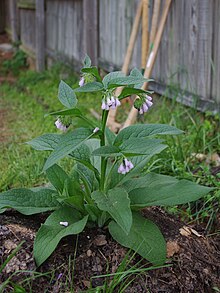
The broad, hairy leaves of the foxglove plant can be confused with comfrey, a common herb which is used by herbalists to treat everything from bronchial problems, broken bones, sprains, arthritis, ulcers, burns, acne and menstrual cramps.

I used this confusion to make things interesting at Fairy Thimble Cottage. 
Comfrey can be confused with Foxglove


People don't usually drop dead immediately from digitalis poisoning. First they have a bunch of symptoms like nausea, vomiting, diarrhea, abdominal pain, hallucinations, and severe headache (hey sound like the side effects of all those drugs they advertise on TV don't they?)

Digitalis poisoning also causes visual impairment and victims tend to see "haloes" around things and the world takes on a yellow tinge. Depending on how much has been ingested, the victim can also have a slow, irregular pulse, tremors, convulsions and heart disturbances (either speeding up or slowing down the heartbeat.)

Death from digitalis poisoning can be confused with a heart attack, which makes it awfully handy for murderers.

Next week I'll talk about another nifty poisonous plant for the use of homicidal characters: Aconinte, aka Monkshood or Wolfsbane.

What about you, readers? Do you find poisonings more interesting than shootings? What poisonous plants do you find the scariest? Can you think of a classic mystery that uses digitalis as a means to murder? 


SHERWOOD, LTD: Camilla Mystery #2


Suddenly-homeless American manners expert Camilla Randall becomes a 21st century Maid Marian—living rough near the real Sherwood Forest with a band of outlaw English erotica publishers—led by a charming, self-styled Robin Hood who unfortunately may intend to kill her. 

When Camilla is invited to publish a book of her columns with UK publisher Peter Sherwood, she lands in a gritty criminal world—far from the Merrie Olde England she envisions. 

The staff are ex-cons and the erotica is kinky. Hungry and penniless, she camps in a Wendy House built from pallets of porn while battling an epic flood, a mendacious American Renfaire wench, and the mysterious killer who may be Peter himself.

Sherwood, Ltd. is only $2.99 in ebook from all the AmazonsiTunesGooglePlay ScribdInkteraKobo, Nook, and Smashwords
And it's  $11.99 in paper from Amazon and Barnes and Noble


Sample Reviews:

"A wily tale of murder, deceit, and intrigue that can stand with the best of them. Her characters are all too real and her dialogue took me from laughter to chills" David Keith on Smashwords

"Smartly written and nearly impossible to put down, I found myself counting the hours until I could leave work and get back to reading! Well done!" T.L. Ingham on Smashwords

"An intriguing and fast paced novel that demands you read on to the next page and beyond. The characters are well constructed and believable and I enjoyed the difference between the USA and UK people. The plight of our heroine is complex and well -managed and in the beginning I was striving for her to find some genuine help and support. The flip over to the UK added more spice! Highly recommended."—David L. Atkinson, author of The 51st State