Showing posts with label Camilla Randall. Show all posts

Friday, March 4, 2016

When Your Editor Says Your Title Stinks


This week I came across an interview I did with romance author Peggy Henderson three years ago. I've pasted it in below. I'd answer most of the questions about the same way today, except the one about "what's coming up." At the time, I was working on two novels that changed in major ways before they were published (in 2014 and 2015.)

They both ended up with very different titles.

Grail Maiden with Cigarette
My editor hated the title I'd put on my Boomer comedy that became THE LADY OF THE LAKEWOOD DINER. I'd been calling it THE ASHTRAYS OF AVALON. I thought it was a hilarious title. I wanted to let people know it was a comedy about nostalgia and the need to imagine a "golden age" that never was. Like Matthew Weiner with his TV series, Mad Men, I wanted to remind people that the Eisenhower-Kennedy "Camelot" era that people look back on as innocent and idyllic stank of tobacco smoke, sexism, and hypocrisy.

Unfortunately, it just made my editor think of a smelly ashtray. Not exactly enticing. So I came up with the Lady of the Lake/diner combo I thought worked even better. And my brilliant cover designer Keri Knutson of Alchemy Book Covers managed to put a cigarette into the hand of Rosetti's Pre-Raphaelite Grail Maiden so I got my reference to smoking in anyway.

The second book I was working on was SO MUCH FOR BUCKINGHAM, my novel about Richard III and character assassination via rumor. I was still in the research stage, and I only had a few scenes mapped out. I knew the story would involve Plantagenet Smith finding the body of a historical reenactor in the Old Hall in Gainsborough, Lincolnshire (which I call Swynsby-on-Trent.) The historical reenactor would be dressed as the Duke of Buckingham, King Richard's nemesis. And someone who appeared to be Richard III would be the only witness.

My working title was THE LAST PLANTAGENET, which I liked because the story involved both Richard III and Camilla's best friend, Plantagenet Smith.

I originally named Plantagenet Smith for a character in a one-act comic Victorian operetta called  Cryptoconchoidsyphonostomata (talk about a title that needed an editor's firm hand!) When I was writing my first Camilla book, I happened to be flipping through a New Yorker magazine and came upon a mention of the play and its protagonist and thought the name would be perfect for Camilla's gay best friend, who hid behind a self-invented, theatrical persona. 

But when I sat down to write the book, as often happens, an unexpected character wandered in. A cat. I decided to name the cat Buckingham, as a tie-in to the Duke of Buckingham storyline. 

When I gave THE LAST PLANTAGENET to my first beta reader, she didn't much like the title. She thought it sounded like a historical novel and would disappoint historical novel fans and not attract people looking for a contemporary mystery. She also didn't think it was very funny. 

I realized she was right. 

That's when I remembered the line in Richard III: "Off with his head. So much for Buckingham!" which wasn't written by Shakespeare, but a Victorian actor named Colley Sibber. So it's known as "the most famous Shakespearean line that Shakespeare never wrote." Since the book is all about deception and how things are usually not the way they seem, I suggested SO MUCH FOR BUCKINGHAM as a title, and she liked that much better. Since it involves a "Duke of Buckingham" being dispatched, plus somebody who does a whole lot for a cat named Buckingham, the title worked for both storylines. 


Interview with Anne and Peggy from February 11, 2013


Peggy: Tell us a little about the person behind the pen.


Anne: My life has been kind of unconventional. I love having adventures. I spent ten years after college wandering the globe. Then I spent a couple of decades in the theater, acting and directing,
Anne on the Wicked Stage
before I moved to writing full time.

One day I was backstage, about to go on in the Comedy of Errors, and I realized I didn't want to act any more. I didn't have that zing of stage fright that makes for a good performance. It was about the same time that my father died kind of tragically and left me a little money. I realized that life was short and it was time to go for my life-long dream of being a novelist. So I left Southern California, bought a little cottage on Morro Bay and haven't looked back. I love the solitude and the fog. I'm doing what I love every day.

Peggy: Why did you decide to write rom-com mysteries? What is the appeal?


Anne: I didn't set out to write mysteries, but dead bodies kept showing up in my rom-com plots. Also a lot of jokes. Especially the kind that come from romance gone wrong. (I think romantic comedy is way undervalued these days. Jane Austen wrote it—and so did William Shakespeare.)

Because of the romantic humor—and probably because I started writing at the height of the chick lit phenomenon—my agent at the time tried to market my work as chick lit.

But it never quite fit. It's not Bridget Jones humor. It's pretty sophisticated—sometimes very dark—and most of my heroines are too mature to qualify as "chicks."

My new publisher finally helped me realize I write mysteries with rom-com elements rather than romance with mystery elements.

I'd say my work is more like Janet Evanovich for English majors.

Historical research can take over your life

Peggy: How much research goes into your books, and how do you tackle that?


Anne: I did almost no research for my first few novels. They're mostly based on my own adventures. But my next one is going to require quite a lot. I'm fascinated by the discovery of what might be the body of Richard III in the English Midlands, so I'm planning a mystery around that. Lots of reading in English History ahead.

Peggy: What is the best comment you ever received from a reader? The worst or weirdest?


One of the strangest was a review for my novel Food of Love. The reviewer must have mixed it up with another book. She said it was the worst lesbian romance she'd ever read. Not that surprising, because it's not about lesbians—and it's not a romance. It's a humorous thriller about dieting. 

As far as best comments, it would be hard to choose. I have been blessed with some wonderful The Gatsby Game. I loved it when hardboiled mystery fan Ben Lelievre said, " I never thought I would have so much fun reading a chick lit novel, but this was great, even for my hardboiled sensibility."

Peggy: Tell us a little about your writing style? Do you plan and plot your stories, or do you just plow through them?


Anne: I'm kind of a "pantser"—at least I like to leave room for the odd character or plot twist to show up—but I always have the ending in mind. And a general idea of the story. I do write a sketchy outline, but I usually throw it out halfway through.

Peggy: Can you tell us a little about your current work, NO PLACE LIKE HOME? Is there a story behind the story?


Anne: I live near the town of San Luis Obispo, CA, which Oprah called "the Happiest Town in America."

San Luis Obispo's Mission Plaza
But we also have a big homeless population. Their stories can be heartbreaking. I wanted to write about how close we all can be to homelessness in the midst of this beachy, "happy" wine country. Even the uber-rich. I also saw a lot of potential humor in putting a Martha Stewart type into a homeless camp. Then I gave her a mysteriously dead husband and sent my sleuth Camilla Randall in to solve the case.

Peggy: What sets your heroine, Camilla apart from all the other women in your hero Ronzo's life? Why is she perfect for him?


Anne: Camilla has a new boyfriend in every novel. They're always Mr. Wrong. She's a former debutante and etiquette expert who's lost all her money. She's always attracted to blue collar guys who are intimidated by her former celebrity.

In NO PLACE LIKE HOME, Ronzo is from the East Coast, like Camilla, so he "feels like home" to her. They fall into each others' arms at the end of the book after she rescues him from nefarious evildoers, and they get a happy ending. But by the next book, something will probably have gone wrong. The only man who's a constant in her life is her gay best friend, screenwriter Plantagenet Smith.

Peggy: Have you ever had writer's block? How do you deal with it?


Anne: I'm so lucky that I haven't. I have the opposite problem. Too many ideas and too little time. I do write pretty slowly.

Peggy: Can you give us a little background on your hero Ronzo that's only in your author notes, and not found in your story? What inspired you to create this character?


Ronzo—Ronson V. Zolek—just sauntered into the story. All I had in my notes was "Mr. X, a tourist
Ronson is named for the lighter company
from New Jersey." But as soon as he walked in, I knew all about him. He's a Croatian-American and Iraq war vet and a fan of heavy metal. His immigrant parents named him Ronson for the cigarette lighter company in Newark where his dad got a job the day Ronzo was conceived. That's not in the book.

Peggy: Describe a favorite scene in your current novel?


Anne: I love it when Camilla's bookstore gets invaded by a "cash mob" perpetrated by Ronzo's blog. She doesn't know he's a blogger, and has never heard of a cash mob. Her bookstore is about to go under, but suddenly she's flooded with customers. Many of them come dressed as her—in her former celebrity persona as "the Manners Doctor." That's when she meets Doria, the homeless Martha Stewart type—who is dressed up as Camilla. I laughed out loud when I was writing that scene.

Peggy: What else do you have in store for your readers?


Anne: It's another rom-com mystery, but longer than a standard whodunnit. The working title is THE ASHTRAYS OF AVALON. Spanning five decades, it's full of Baby Boomer nostalgia. The theme is the myth of the Golden Age—and how it never existed. Every age had its drawbacks—like sexism and cigarette smoke.

Meanwhile I'll be doing all that research for THE LAST PLANTAGENET taking Camilla back to the English Midlands (the setting of SHERWOOD, LTD.) where she meets up with what may or may not be the ghost of Richard III.
***

So I was accurate about what the books were about, but I was on the wrong track with the titles. I've found out since that changing titles is very common. Lots of classic books started out with titles that might have kept them from becoming such huge successes. The Great Gatsby was originally called Trimalchio in West Egg, and Lord of the Flies was originally called Strangers from Within.

You can read more about rejected book titles and how to choose the right one for your book in my post 10 Tips for Choosing the Right Book Title

Have you ever been told to change the title of a book or story you've written? Have you ever decided not to read a recommended book because of an off-putting title?


BOOK OF THE WEEK


The Lady of the Lakewood Diner is available at all the Amazons, iTunes, Kobo, and Nook. 

 LadyLake-3-smaller


Who shot rock diva Morgan Le Fay? Only her childhood friend Dodie, owner of a seedy small-town diner, can find the culprit before the would-be assassin comes back to finish the job. Boomers, this one's for you. And for younger people if you want to know what your parents and grandparents were really up to in the days of Woodstock and that old fashioned rock and roll. Plus there's a little Grail mythology for the literary fiction fans.

"A page turning, easily readable, arrestingly honest novel which will keep you laughing at yourself."...Kathleen Keena

"I borrowed this book free with my Amazon Prime membership, but I enjoyed it so much that I don't want to give it up. I'm buying a copy to keep."...Linda A. Lange

"In The Lady of the Lakewood Diner, nothing is sacred, nothing is profane. And yet, in the end, love does conquer all. If you're of an age to remember Woodstock and the Moonwalk, don't miss it. If you're not, well, you won't find a better introduction." ...Deborah Eve of the Later Bloomer

"With rare perception and insight, the author lays bare the souls of the two women as they take their own unique paths though life, through fumbling first attempts at sex, to lopsided relationships, to the triumph of ambition and the agony of missed chances. It’s an epic coming-of-age story filled with passion, struggles, mistakes, and redemption. The main characters were extremely deep and realistic, along with vivid supporting characters. If you love literary fiction set against a fascinating cultural backdrop, you’ll love this book. Highly recommended"....Laura 6

Friday, February 19, 2016

So Much for Buckingham Now in Paperback, and the Ebook is on Sale!


SO MUCH FOR BUCKINGHAM  is now in paperback! The paper version is available at Amazon, Amazon UK , and Barnes and Noble
And in honor of its hard copy debut, the ebook is only 99c for one week! The ebook is on sale at all the Amazons. 
It's also available at Kobo, Nook Smashwords, iTunes, Inkterra, Google Play, and Scribd.

So-Much-for-Buckingham-final

This comic novel—which takes its title from the most famous Shakespearean quote that Shakespeare never wrote—explores how easy it is to perpetrate a character assassination whether by a great playwright or a gang of online trolls. It's a laugh-out-loud mashup of romantic comedy, crime fiction, and satire: Dorothy Parker meets Dorothy L. Sayers.


Favorite Characters: Vera Winchester


One of my favorite characters in the Camilla books is Vera Winchester, the office manager at Sherwood, Ltd. She's an important character in both Sherwood Ltd and So Much for Buckingham. 

She's very kind and adores animals. Her excellent business sense—and ability to ignore unpleasant details—keeps the unorthodox company running in spite of the sometimes-criminal antics of the owners.

I imagine her looking a bit like Elizabeth, Hyacinth Bucket's long-suffering neighbor in Keeping up Appearances, played by Josephine Tewson.

Vera usually wears a serviceable navy blue pantsuit and her hair is cut in a "no-nonsense gray bob."

The character was inspired by the real-life office manager at the UK publishing company that published my first two books. The real Vera, whose name was Pat, was actually younger than me—and not quite so long-suffering. She had a sharp wit and wasn't as lacking in self-awareness as Vera.

Pat became a close friend when I lived in England. She often invited me to her lovely house for Sunday dinner and let me take baths in her luxurious tub. My digs only had a dribbly shower in an unheated bathroom shared with five or six men. (I did say my experiences there were an adventure.)

Pat and I always exchanged long letters at Christmastime. I loved getting the news from Gainsborough and hearing about the dramas as the company fizzled after the mysterious disappearance of the co-owner. Pat was sure that the real life "Peter Sherwood" had staged his death in order to evade creditors and she thought he might be somewhere in France.

But two Christmases ago, no card arrived, and I had a bad feeling. I Googled her name in the local Gainsborough paper and was devastated when I found her obituary. All I could find out was that she had died "after a short illness."  It was a real blow to me. I had always planned to go back and visit her someday. She and her family had been so welcoming and there was something timelessly English about their home and way of life. Pat was an avid gardener and voracious reader. She took the "pervy books" side of the publishing company in stride and glossed over it most of the time, although she could make some hilarious jokes about them.

But in a way my friend lives on in Vera Winchester. Vera is as fiercely loyal to Peter Sherwood as Pat was to her real life bosses.

I brought Vera back in So Much for Buckingham. She is the one who finally helps Plantagenet when he is stuck in the "custody suite" in the Swynsby Constabulary jail accused of murdering a historical reenactor. In the awful, windowless cell, poor Plant has been hallucinating visitations by the ghost of Richard III and has only a tenuous hold on his sanity.

Here's what happens when Vera finally appears in So Much for Buckingham:

"A uniformed officer appeared.
"You have a guest, Mr. Smith," he said. "A lady."
Good god. He hoped it wasn't Queen Elizabeth I or any other dead royal personage.
"Am I in the right place?" A high pitched voice came from the corridor outside. "Is this where you have Mr. Plantagenet Smith? You must let him go. He's a famous Hollywood film writer. From America."
A sweet-faced woman in her fifties fluttered into the room. She wore a flowered dress and a large, swooping sort of hat over a no-nonsense gray bob.
"Mr. Plantagenet Smith?" she said. "I'm Vera Winchester. Office manager at Sherwood publishing." She extended a hand. "I'm afraid I was on my way to my son's wedding rehearsal dinner, which is why the hat…" She patted her dramatic head gear. "He's getting married tomorrow. Our Callum. To his girl Bryony. Nice young woman, if a bit flighty. Her brother's not right in the head, unfortunately, but luckily it's not hereditary. She's in the family way, but of course they all are these days, aren't they? Cart before the horse. It's all been rush-rush-rush since we found out. They've had to throw together the wedding and tonight's rehearsal dinner is in the back room at our local. We had no time to do anything posh."
Plant clutched Vera's hand, not wanting to let go. He shook it again, hoping against hope that she was real.
"I can't tell you how glad I am to see you," he said. "So Camilla somehow got in touch with you? Is she all right?"
"I haven't the foggiest," Vera said. "I haven't heard a peep from Camilla, and we've been that worried about her because of all those nasty reviews. But I suppose she doesn't have my home email address."
Maybe Camilla hadn't been overreacting to those reviews. Vera looked genuinely stricken.
She went on. "It's Henry Weems who sent me here. He's my boss at Sherwood Ltd. He's sent the money for bail, but apparently they don't need it yet. They're supposed to release you to my custody, he tells me. Although if you really were a murderer and wanted to escape, I can't imagine how I'd stop you, but…do you think I might have my hand back now?"
Plant realized he'd been hanging onto the poor woman's hand.
"You mean I can leave?" He needed to compose himself. "I'm free on bail?"
"No bail set, because you haven't been charged. You're still a person of interest. But you're free to roam the confines of Swynsby-on-Trent," she said. "Which means you may come to Callum's rehearsal dinner…I do hope you like roast beef. We're serving a roast, with Yorkshire pud, of course. Fresh peas and carrots from our community garden. And a nice cream cake for afters."
"That sounds like the food of the gods to me, Mrs. Winchester." Plant felt himself salivate. He didn't know exactly how long he'd been in here living on mystery meat sandwiches, but he knew that any real food would be a taste of heaven right now.
A different officer arrived and escorted them down the hall to the reception area where Plant had first come in—how many days ago? It could have been years.
Vera kept up her chatter as they walked.
"Bryony is watching her figure, and didn't want us to order a cream cake, but it's Callum's favorite. Bryony doesn't want her baby bump to show in her gown tomorrow, but of course it will. It's not as if everybody doesn't know already. The truth has a way of getting out, doesn't it?"
"The truth?" Plant stared at his unlikely rescuer as the custody sergeant sorted through some papers. 
"Oh, I certainly hope the truth will come out, Mrs. Winchester. I deeply hope so." He turned to the sergeant. "When do I get my things? l have to change out of this, um, uniform or whatever it is."
"Not until the case is closed," the sergeant said.
"I'm supposed to walk out of here naked?"
"Oh, I forgot," Vera said. "I must run out to the car. They told me to bring you something to wear. So I brought you one of my George's old suits, since we're going directly to the rehearsal dinner. But you're quite a bit trimmer than George. I've also brought a shirt and shoes and some smalls. I do hope they fit."
Vera ran outside as Plant signed many pieces of paper and the sergeant informed him in a stiff voice that he must not leave the area, and must check into the station daily while the case was still pending or he would not receive his passport.
"And what is the Sywnsby address where you'll be staying?" he asked. "We can only allow you to go if you have a local address."
Plant tried to remember where Brenda said Vera lived. "Rope…Rope Road," he stammered.
Luckily Vera reappeared, carrying a garment bag.
"1187 Ropery Road," she said. "Mr. Smith will be in my custody. Me and my husband, George Winchester. I think you know George from down the pub, don't you Sergeant?"
The sergeant gave a small smile. 

This is excerpted from So Much for Buckingham, which is #5 in the Camilla Randall Mysteries, but can be read as a stand-alone.

Do you have favorite minor characters in books? Do you wonder if they're inspired by the author's real friends? Who are some of your favorite minor characters? If you want to know more about using real people in your fiction, check out my piece at Artist Unleashed this week.


Friday, January 29, 2016

Can Mr. Wrong Become Mr. Right? Choose your Favorite of Camilla's Unsuitable Suitors


The Camilla Mysteries feature perennially down-and-out former socialite Camilla Randall. I love writing about Camilla because she's so different from me. She’s an ultra-polite New York fashionista who’s a magnet for murder, mayhem and Mr. Wrong. (More about the real-life debutante who inspired her in my post "Why Camilla Randall?")

Me, I'm an old hippie who tends to use more four-letter words than I should. I live in a blue-collar small town on the coast of California. I'm partial to Crocs, sweatshirts, and stretchy jeans. My life is peacefully boring.

Camilla and I have one thing in common, though: we both make bad choices when it comes to romance. I won't say that the men in my life haven't taken me on excellent adventures, but I discovered some time ago that I'm happier living solo.

Camilla, on the other hand, is still looking for love in all the wrong places.

In the prequel to the series, The Best Revenge, we see Camilla as a teenaged New York debutante. While she's being interviewed in a trendy restaurant by the condescending reporter Jonathan Kahn, she sees her current boyfriend—a "Eurotrash" prince—with another woman, supermodel Regina (a cameo by the heroine of my comic thriller Food of Love.)

Camilla quickly gets over Prince Aldo, and proceeds to fall in love with the arrogant, but oh-so-sexy Jonathan Kahn.

But in Ghostwriters in the Sky, she's in the middle of a messy divorce from Jonathan and meets the charming L.A.P.D. captain, Maverick Jesus Zukowski, and they seem to be headed toward a happy ending.

But by the beginning of Sherwood, Ltd, Camilla's long-distance romance with Captain Zukowski has fizzled and Camilla falls for Peter Sherwood, the enigmatic, Robin-Hood-like figure who runs her UK publishing company. But she has to deal with the small problem that he may be trying to kill her.

In No Place Like Home, Camilla meets her most unlikely suitor, Mr. X, a.k.a. Ronzo (Ronson V. Zolek.) He's charming and brave, but he's a New Jersey boy and she's now living in California. 

Jonathan might look like '80s Jeff Goldblum
In So Much for Buckingham, Camilla reunites with two of her former suitors. (I'm not telling which ones: spoilers.)

I haven't decided who she will end up with in book #6, which has the working title The Queen of Staves. Maybe she'll have a whole new love interest.

Readers, if you have a favorite among Camilla's suitors, I'd love to hear from you in the comments. Vote for the one you'd like to see more of! 

Jonathan Kahn—This is how Camilla describes Jonathan at their first meeting:  "He had a profile special-ordered from Mount Olympus, a tanned, muscular body, and quantities of unruly black hair that a stylist would die to tame."
Or maybe Jon Hamm? 


Jonathan was a dedicated newspaper reporter, but he fell from grace when his success as a Geraldo-Rivera-style TV muckraker went to his head. And, um, other parts. He got caught up in a hooker scandal, and established a serious relationship with Jack Daniels. His relationship with Marva, aka Mistress Nightshade almost got a lot of people killed.Last heard from, he was drinking his way through the dive bars of Southeast Asia. 


But what if he got sober? Could he and Camilla finally reconcile? He says he still loves her.


Jimmy Smits could play Rick
Captain Maverick Jesus "Rick" Zukowski—Rick is a tall, Mexican-Polish L.A. policeman. He also writes novels (not very good ones.) He has overcome a difficult childhood and a street-gang past. He never quite recovered from the death of his wife and has some anger management issues. 

On the other hand, he's honorable and kind, with a great sense of humor, a "scrumptious smile" and "warm brown eyes." Camilla says "He had a brotherly/boy next door manner that made me feel safe."

Rick and Camilla couldn't keep up a bi-coastal relationship, and eventually he leaves her for "a sweet vice detective named Lola". 

But what if it never worked out with Lola? Could Rick and Camilla click again, now that she lives in California, too?


Peter might look like Peter O'Toole
Peter Sherwood—Peter is a charming Englishman with a murky past and a less-than-reliable moral compass. He's wiry and "good-looking, in an unkempt, What-Not-To-Wear sort of way: Oxford don meets Pirate of the Caribbean." 

It's rumored he won his publishing company in a poker game. Some people think he has an aristocratic background, but it's more likely he grew up poor in the English Midlands. 

The staff at Sherwood, Ltd. are loyal to him, but they're also aware of his faults. He has a habit of disappearing for months—or years—at a time. 

But he saves Camilla's life more than once, and protects her when everything around her is chaos. Did he really die when his yacht went down off Jamaica? 

Ronzo's a Jersey Boy like Jon Bon Jovi

Ronson V. Zolek a.k.a. Ronzo—Ronzo's Croatian immigrant parents died when he was young. He was raised in a Newark slum by his grandmother. He's a jack of all trades and full of contradictions. 

He's a music blogger for Rolling Stone who also works as a detective for a law firm. He has a Tony Soprano accent, but his manners are impeccable. He's an easy-going rock and roll guy and also an Iraq War veteran. 

He seems to have a lot of compassion for the homeless and loves small animals...or does he? He's famous for his butt tattoo of a Stratocaster guitar. Camilla finds him irresistible, and thinks he looks like Jon Bon Jovi. But is he a good guy or a bad guy? 


People tell Plant he looks like Leslie Howard
Plantagenet Smith—Through all the stories, Camilla's one constant is her best friend, the bisexual playwright, Plant Smith. Early in their friendship, they have a romantic relationship, but it doesn't last long. 

Plant was an orphan raised in poverty, but he earned a scholarship to Princeton and re-invented himself as a blue-blood by changing his name from John Smith and befriending Camilla's wealthy debutante set. He becomes an Oscar-winning screenwriter, but he seems to be as unlucky in love as Camilla, until he meets California businessman Silas Ryder. They marry, in a big wedding planned by Camilla, but the relationship is rocky.

In So Much for Buckingham, Plant finally gets his own voice and tells the story himself in chapters that alternate with Camilla's narration. He also gets accused of murder when he discovers the body of a young historical reenactor playing the Duke of Buckingham in the Old Hall at "Swynsby-on-Trent".

So readers, which one of Camilla's unsuitable suitors do you like best? Do you want to see any of them reappear? What kind of man do you think Camilla could find happiness with? 

News: I'm currently recording the audiobook of So Much for Buckingham with narrator C.S. Perryess reading Plantagenet Smith's chapters.


THE BEST REVENGE: The prequel (Camilla Mystery #3)

When Camilla Randall, a 1980s New York debutante, is assaulted by her mother’s fiancé, smeared in the newspapers by a sexy muckraking journalist, then loses all her money in the Savings and Loan Scandal, she seeks refuge with her gay best friend in California. But her friend has developed heterosexual tendencies and an inconvenient girlfriend, so Camilla has to move in with wild-partying friends. When a TV star ends up dead after one of their parties, Camilla is arrested for his murder. She must turn to a friendly sanitation worker, a dotty octogenarian neighbor and the muckraking journalist who ridiculed her--who also happens to be her boss. 

The Best Revenge is 99c until February 1st at all the Amazons. It's also available at Smashwords, Kobo, Google Play,  Apple, NOOK, and  Page Foundry (Inktera)


"…while laugh-out-loud funny, [The Best Revenge] carries a message about how we view ourselves and how others' views of us may conflict, yet make us grow."...composer Richard Alan Corson

Friday, January 22, 2016

Bag Lady Fears: How I Faced Mine by Writing "No Place Like Home"


No Place Like Home
is #4 in the Camilla Randall Mystery series, but it actually started out as a stand-alone novel, without Camilla's comic presence. 

I started writing the story before my big success with the first three Camilla comedies. The Martha Stewart-like Doria Windsor was the protagonist. She materialized in my consciousness as a result of what some people call "Bag Lady Fear Syndrome."

According to MSN financial columnist Jay McDonald, "Bag lady syndrome is a fear many women share that their financial security could disappear in a heartbeat, leaving them homeless, penniless and destitute."

The Washington Times reported, "90 percent of women say they feel financially insecure…and almost half are troubled by a 'tremendous fear of becoming a bag lady'."

Bag-lady syndrome can be paralyzing, according to Olivia Mellan, a Washington, D.C. therapist who specializes in money psychology.

She says "Lily Tomlin, Gloria Steinem, Shirley MacLaine and Katie Couric all admit to having a bag lady in their anxiety closet."

"It cuts across women of all social groups; it's not like wealthy women don't have it," says Mellan. "Heiresses, women who have inherited wealth, have bag-lady nightmares because they really feel like the money came to them magically and can leave them just as magically."
I imagined Hobo Joe's campsite looking like this.

When you quit your day job to write full time—especially if you're single—those fears can escalate to nightmares, anxiety attacks and debilitating self-doubt.

For me, they hit a crescendo when my first publisher went out of business and I had to go back to square one, writing query letters to agents and editors again like a newbie. 

My magazine writing gigs had dried up, too: either the journals had gone under or were no longer paying. I'd been out of the workforce for years and the world was in the middle of a recession. My savings were dwindling fast. I feared I'd made all the wrong financial choices and I'd soon be living out of my car...or worse. 

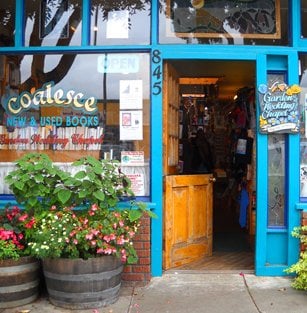
I modeled Camilla's bookstore on Coalesce in Morro Bay
I started having a recurring nightmare about living in a rusted, wheel-less truck in some kind of dump full of rats. My skin was crawling with insects. Sometimes parts of my body would fall off. I'd wake up screaming.

One morning I woke from one of those horrific dreams to an interview on NPR's Morning Edition. (Yes, I have Public Radio on my clock radio: I guess that qualifies me as a super-nerd.)  They were talking to a successful Manhattan magazine editor who had lost her life savings to Bernie Madoff. 

Look: it can happen to anybody, I told myself—even people with a ton of savings who have done everything right.

I got up and read my local morning paper, which was full of letters to the editor complaining about how homeless camps and panhandling were ruining our town's idyllic image as "the happiest town in America."

I realized that magazine editor I'd heard on NPR could be one of those scruffy people standing outside the San Luis Obispo Mission with a cardboard sign. She could be one of those despised people living in the "filthy" camps. 
The intrepid homeless crew find the bad guys here at Big Sur

So I took a day off querying and jotted down an outline of a story about a magazine editor who lost everything and ended up in a homeless camp in San Luis Obispo. She was not only conned by a Bernie Madoff type, but married to him, so in addition to losing everything, she was accused of being complicit in his crimes. (Writers can be so mean.)

But it was cathartic. Picturing somebody like Martha Stewart living in a tent and cooking over a Sterno stove, worrying about where to go for showers and basic bodily functions—not knowing which homeless people she could trust—helped me to walk myself through my own "bag lady" fears.

Thinking the "unthinkable" sometimes helps us to cope with our anxieties. If we can visualize ourselves in a terrifying situation that has a positive outcome, it can help us overcome the terror.

As the Anxiety Doc says "When it comes to treating anxiety, panic attacks and phobias, creative visualization techniques have proven very therapeutic for sufferers. In order for the visualization to be completely effective, the person must involve all their senses in the process. They need to see themselves performing the behavior, hear the sounds associated with it and feel any tactile sensations. In some cases, even the senses of taste and smell will be involved."

Hobo Joe and the Boll Weevils played here at the Red Barn
And of course, that's exactly what a writer does. So when I visualized Doria Windsor in that homeless camp, I pictured her surviving each of my own fears: the lack of hygiene, the stink, the cold, hunger, loss of dignity, etc.

And if she could do it, so could I.

To give the homeless people in the camp personalities and backstories, I talked to the homeless people who panhandle in front of some of my favorite stores in Morro Bay. One woman was remarkably plucky and full of humor.  She became the model for my character of Lucky.

I decided not to make my homeless characters objects of pity, but strong-minded survivors who help solve the mystery of a homeless man's murder. In a way, they're the real heroes of my story. Hobo Joe is a musician who puts together a band of homeless musicians called the Boll Weevils. They play at the Red Barn in Los Osos.

Not long after I started the book, I got an offer from the editor of an independent press to publish my backlist. Then another offered to look at the new stuff.  Between September 2011 and December 2012, I published seven books. Two of the Camilla mysteries made the bestseller lists, and my editor wanted another Camilla book ASAP.

I was still working on the Doria story, but I realized that Camilla is usually on the brink of homelessness herself and she and Doria might even be friends I had left Camilla at the end of Sherwood Ltd working in a bookstore, not the most lucrative of businesses in the age of ebooks.

So I wove Camilla into the story and added a mysterious murder and of course, some romance for my always unlucky-in-love sleuth. I gave Doria a boyfriend too.

Turning the story into a romantic comedy-mystery lightened it up considerably and helped turn a lot of my fears into laughs.

Things are looking up. I think making my characters face the "unthinkable" helped me to think it through for myself. I hope it helps my readers, too.

What about you? Do you have fears of becoming homeless? Do you know any people who do? Do you think women are more likely to have the fear than men? Do you deal with your fears by writing about them? 

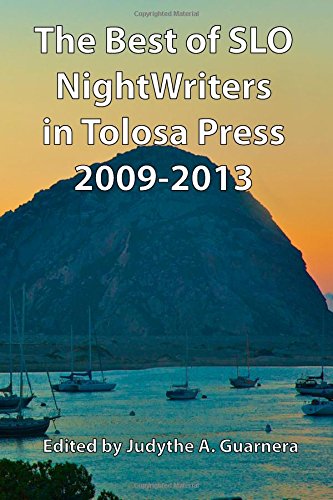
I've written on this subject for More magazine and a shorter version of this piece appears in the SLO Nightwriters anthology. 

Friday, January 15, 2016

A Journey to Lincolnshire: Time Traveling in the English Midlands

by Anne R. Allen


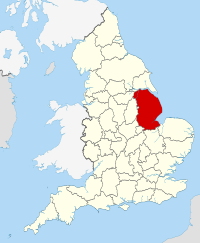
The second Camilla novel, SHERWOOD LTD, is something of love-letter to England's East Midlands and the county of Lincolnshire—one of the least touristy spots in the British Isles, but one rich in history and folklore.

It's a place I discovered by happy accident several years ago, when my novel FOOD OF LOVE was accepted by a UK publishing company that had recently moved from the bustling industrial city of Leeds to the little market town of Gainsborough, on the banks of the River Trent, which marks the border between Lincolnshire and Nottinghamshire.

As I wrote last week, my new publishers turned out to be an eccentric band of publishing outlaws who published mostly hard-core erotica—the opposite of my comic mysteries about Camilla, the Manners Doctor. But the company was eager to branch into mainstream fiction and the managing partners invited me to fly over to promote my book and share free digs in a vast 19th century factory complex they’d just bought. 

Fittingly, the factory had last been used as a ladies underwear factory and was called "The Shadowline Building." (I call it "The Maidenette Building" in my novel.)  Most of my California friends thought I was deeply bonkers, but I've never turned down a chance to travel, so I found a tenant for my little beach house, bought a plane ticket for England and jumped into the adventure.
Yes, there's a real Sherwood Forest.

I'd lived in England many years ago—working in London for eight months after college—but Lincolnshire is the opposite of the big, modern, multi-ethnic capital to the South. It’s the "green and pleasant land" of the storybooks I read in my youth—"the Shire" of Middle Earth. I immediately fell in love with the lush, pastoral landscape, the friendly people, and the history-steeped, time-travel atmosphere. 

There I was, in the land of Robin Hood—the home of "Lincoln Green."

The Major Oak in Sherwood Forest
 I even loved the food. Make all the jokes you want about English cuisine, but they make some of the best cheeses in the world, and in a town full of old-fashioned bakeries, small artisanal butcher shops and a twice-weekly farmer’s market, I ate very well. (Probably too well. Lincolnshire is not the best spot to be watching your weight. Especially when you add the wonderful micro-brewery ale.)

Gainsborough itself has a long and romantic history. It’s the town George Eliot called "St Oggs" when she wrote The Mill on the Floss—and the river that flowed by the warehouse windows was "the Floss" of her iconic novel.

Gainsborough was already ancient by the time George Eliot/Mary Ann Evans sought refuge there. In fact, it was well established by the time a Viking King named Sweyn Forkbeard, having defeated the Saxon king Ethelred the Unready, made it the capital of England in the ninth century.
Sweyn Forkbeard

That lasted about five weeks until he had a fatal fall from his horse and was succeeded by his son King Canute, of stopping-the-tide fame. (Which he also did in Gainsborough, pretending to stop the Trent’s great tidal bore, the Aegir.)   

In my novel, I call the town Swynsby-on-Trent, in honor of Mr. Forkbeard (literally “Sweyn’s home, since "by" was a Viking place-name suffix meaning “home.”)

I ended up living in Gainsborough on and off from 2002-2005, and in the end the publishing company went under rather tragically, with the mysterious disappearance of one of the owners (his body was never found—which of course I had to use in my novel.) But it was a fine adventure while it lasted, and I’ll always cherish the friendships I made there. 
One of the best preserved medieval manor houses in England
I'm not the only person to have fallen in love with Gainsborough in the 'oughties. According to the Guardian, Gainsborough real estate became some of the most expensive in England in 2007. Writing in August of 2008, Tom Dyckhoff said:

"Gainsborough marked the high water mark of house price madness before - cue thunderclap - the Crunch! Oh, happy days! Oh, halcyon days! Last year, Gainsborough's house prices leaped by a frankly barking 156%, the highest in the country. Inexplicable. I mean, it's a perfectly respectable place, with that appealing tinge of not-quite-in the-modern-world common to Lincolnshire. But come on, it's Lincolnshire, miles from anywhere."

And that's its appeal, exactly. It's the town that time forgot. It's in the middle of nowhere. A green and pleasant nowhere. Surrounded by fields of daffodils and forests carpeted in bluebells.

It's the England of storybooks. I was dying to set a novel in Gainsborough, but in order not to hurt any feelings (or incur any lawsuits) I decided to fictionalize the town and set an entirely made-up mystery there, featuring my always-polite amateur sleuth, Camilla.

I wasn’t able to incorporate all my favorite Lincolnshire haunts, however, or the story would have turned into a travelogue. (In fact, my editor made me eliminate several of my more tour-guidey digressions.)

Downtown Gainsborough on market day.
I did include a glimpse of the open market in the central square, where traveling peddlers still display everything from fresh produce to meat pies and ribbons and pots and pans, just as they did in Robin Hood’s day—only a few blocks from the very modern Tesco supermarket.

I also have several scenes set in one of Gainsborough’s picturesque pubs, many of which began as coaching inns in the 17th and 18th centuries.

Where Plantagenet meets the ghost of  Richard III
Unfortunately, I had to eliminate a scene set in Gainsborough’s greatest landmark—the "Old Hall"—one of England’s best-preserved medieval manor houses. The beautiful building, built on the ruins of Sweyn Forkbeard’s castle, was a place visited by the likes of Richard III and Henry VIII (who met his last wife, Katherine Parr, there.) It also sheltered the Separatist "Pilgrim Fathers" as they made their escape to the Netherlands and then to the New World on the Mayflower. 

So when I revisited Lincolnshire in Camilla mystery #5 SO MUCH FOR BUCKINGHAM, I took Camilla's best friend Plantagenet to "Swynsby-on-Trent" where he meets what appears to be the ghost of Richard III in the tower of the Old Hall. When Plant is accused of the murder of a mysterious historical re-enactor, unfortunately, Richard III seems to be the only witness.

Someday I'd like to take all my characters to the historic city of Lincoln—only fifteen miles from Gainsborough—which houses one of Europe’s greatest Gothic cathedrals, as well as an 11th century castle that is the home of one of the original copies of the Magna Carta.
Lincoln Cathedral, build in 1072

Lincoln Cathedral, built in 1072, rivals Chartres in its soaring Gothic magnificence. It is actually taller than Chartres, and was the tallest building in the world for 249 years (1300–1549.) The cathedral was used as a stand-in for Westminster Abbey in the 2005 film of The DaVinci Code.

Across the square from the cathedral is Lincoln Castle, built by William the Conqueror in 1068, and one of the country’s best-preserved castles. William built his castle on the ruins of the fortress originally built by the Roman armies who occupied Britain from 43 AD through the fourth century.

Many houses in the old part of Lincoln are built on top of the old Roman forum. I was lucky enough to be invited to visit a woman whose townhouse had the base of a huge marble column in the basement. Walking up the stairs was like walking through time, from the ancient forum to the medieval kitchen, to an 18th century dining room to a Victorian parlor and up to a modern couple of bedrooms that looked out on the whole city.

That house screamed to be used in a novel, but I haven't worked it into one of my plots yet. 

Lincoln Castle, built in 1068
I have health problems that make travel tough for me these days, but I've always fantasized going back to Lincolnshire. 

So far, I have only been able to do it in fiction. 

But someday I'd love to get back for a little more of their delectable poacher cheese, plum bread and Lincolnshire’s famous sausages.

And if you'd like to do some armchair traveling, pick up a copy of Sherwood, Ltd or So Much for Buckingham. 

What about you, readers? Have you ever visited the English Midlands? Have you seen Lincoln Cathedral or Sherwood Forest? What is your favorite part of the UK for time-traveling? Or do you prefer to do your travel via armchair? 


SHERWOOD, LTD: Camilla Mystery #2


Suddenly-homeless American manners expert Camilla Randall becomes a 21st century Maid Marian—living rough near the real Sherwood Forest with a band of outlaw English erotica publishers—led by a charming, self-styled Robin Hood who unfortunately may intend to kill her. When Camilla is invited to publish a book of her columns with UK publisher Peter Sherwood, she lands in a gritty criminal world—far from the Merrie Olde England she envisions. The staff are ex-cons and the erotica is kinky. Hungry and penniless, she camps in a Wendy House built from pallets of porn while battling an epic flood, a mendacious American Renfaire wench, and the mysterious killer who may be Peter himself.

Sherwood, Ltd.is only $2.99 or the equivalent in ebook from all the Amazons, iTunes, GooglePlay, Scribd, Inktera, Kobo, Nook, and Smashwords. It's also available in paper from Amazon and Barnes and Noble
Sample Reviews:

"A wily tale of murder, deceit, and intrigue that can stand with the best of them. Her characters are all too real and her dialogue took me from laughter to chills" David Keith on Smashwords

"Smartly written and nearly impossible to put down, I found myself counting the hours until I could leave work and get back to reading! Well done!" T.L. Ingham on Smashwords

"An intriguing and fast paced novel that demands you read on to the next page and beyond. The characters are well constructed and believable and I enjoyed the difference between the USA and UK people. The plight of our heroine is complex and well -managed and in the beginning I was striving for her to find some genuine help and support. The flip over to the UK added more spice! Highly recommended."—David L. Atkinson, author of The 51st State


SO MUCH FOR BUCKINGHAM: Camilla mystery #5


This comic novel—which takes its title from the most famous Shakespearean quote that Shakespeare
never wrote—explores how easy it is to perpetrate a character assassination whether by a great playwright or a gang of online trolls.

It's a laugh-out-loud mashup of romantic comedy, crime fiction, and satire: Dorothy Parker meets Dorothy L. Sayers. Perennially down-and-out socialite Camilla Randall--a.k.a. "The Manners Doctor"--is a magnet for murder, mayhem and Mr. Wrong, but she always solves the mystery in her quirky, but oh-so-polite way.

Usually she has more than a little help from her gay best friend, Plantagenet Smith. In this hilarious episode she makes the mistake of responding to an online review of one of her etiquette guides and sets off a chain of disasters that lands poor Plant in the Swynsby nick, and nearly gets her murdered.  

Sample reviews:

"Delicious wit, wonderful eccentric characters, and a beguiling plot. Camilla Randall is a delight!"...Melodie Campbell, "Canada's Queen of Comedy."

"Both a comedic romance and a crime suspense thriller, it presents the 'Perils of Pauline' adventures of a modern author, Camilla, whose mad-cap follies are hugely entertaining. But the novel has a serious undertone of social comment. Even the craziest of its zanies have their counterparts in the real world and the author faithfully depicts their grim, and often deadly, sub-cultures behind a veneer of knockabout wit. Highly recommended for anyone who enjoys romance, and crime suspense, with a lethally satiric edge." Dr. John Yeoman.

"Anne Allen's ability to weave throughout her stories a current social commentary easily and throughout the story amazes me. She does this without jeopardizing her plot or her characters' development."...
blogger Sherrey Meyer

So Much for Buckingham is about $3.99 at all the Amazons,
Kobo, Smashwords, iTunes, Inkterra, Google Play, and Scribd.
(And it's about to come out in paper very soon. I'm proofing galleys now.)