Arsenic used to be the bread and butter of poisons. Probably more classic mystery novels rely on it than any other. In the 19th century it could be found in pretty much every household, since rats and other vermin were a constant problem.
People could buy it without anybody suspecting them of planning to do in their rich, cranky Great-Aunt Augusta.
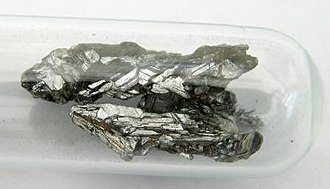 |
| Arsenic in its pure form |
And best of all, the science didn't exist to detect it.
"First of all, you could be murdered by your nearest and dearest. Now that was scary, you see. You might not be the sort of person who’d go out and get drunk and get into a fight, but you could still be poisoned by your cook. You could fear absolutely anybody, even people who ought to be powerless, like servants or your wife or your children. The other thing that people really feared about poison was the fact that poison attacks you from within. You can’t run away from it. You can’t fight back."
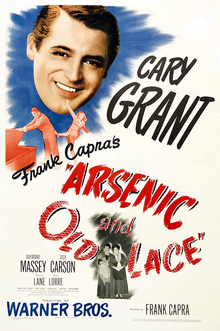
It is super-toxic in all forms and its effects are cumulative. So people can be poisoned over a long period of time.
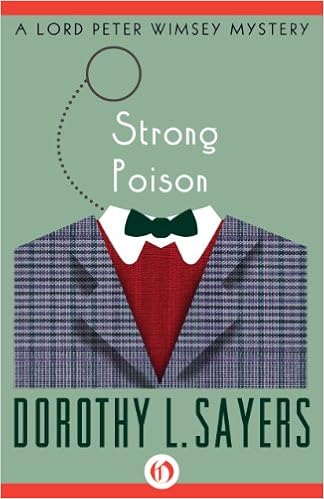
Arsenic is the murder weapon in one of my favorite mysteries, Dorothy L. Sayers' Strong Poison. But Ms. Sayers wrongly has the murderer make himself immune to arsenic by taking tiny doses and building up immunity over time. Modern science shows this isn't possible, since metals are not eliminated by the body and the arsenic would have killed him, rather than make him immune.
I'm sure Ms. Sayers, who read Classics and Medieval Literature at Oxford, took her information from Livy or Pliny the Elder, who both told the tale of the ancient king Mithridates. The stories said the king—one of Rome's most formidable enemies—regularly took arsenic and other poisons in tiny doses to make himself immune to poison.
Mithridates VI, who ruled Pontus (in modern Turkey) from 135–63 BC, also seems to have had a forward-looking hairdresser. His swirly locks shown in this statue could contend with those of a contemporary American Presidential hopeful. Or maybe he has a vampire possum on his head.
But if the king did indulge in the poison-inoculating regime that's now called "mithridatism," arsenic probably wouldn't have been an ingredient, since it would have killed him eventually. And as we know from A. E. Housman, Mithridates, he died old.
Arsenic is the murder weapon in one of my favorite mysteries, Dorothy L. Sayers' Strong Poison. But Ms. Sayers wrongly has the murderer make himself immune to arsenic by taking tiny doses and building up immunity over time. Modern science shows this isn't possible, since metals are not eliminated by the body and the arsenic would have killed him, rather than make him immune.
I'm sure Ms. Sayers, who read Classics and Medieval Literature at Oxford, took her information from Livy or Pliny the Elder, who both told the tale of the ancient king Mithridates. The stories said the king—one of Rome's most formidable enemies—regularly took arsenic and other poisons in tiny doses to make himself immune to poison.
 |
| Mithridates VI of Pontus |
But if the king did indulge in the poison-inoculating regime that's now called "mithridatism," arsenic probably wouldn't have been an ingredient, since it would have killed him eventually. And as we know from A. E. Housman, Mithridates, he died old.
From A. E. Housman's poem,
Terence this is Stupid Stuff
There was a king reigned in the East:
There, when kings will sit to feast,
They get their fill before they think
With poisoned meat and poisoned drink.
He gathered all that springs to birth
From the many-venomed earth;
First a little, thence to more,
He sampled all her killing store;
And easy, smiling, seasoned sound,
Sate the king when healths went round.
They put arsenic in his meat
And stared aghast to watch him eat;
They poured strychnine in his cup
And shook to see him drink it up:
They shook, they stared as white's their shirt:
Them it was their poison hurt.
—I tell the tale that I heard told.
Mithridates, he died old.
What about you, readers? Do you find arsenic makes a good murder weapon for mysteries? What mysteries can you name that use arsenic?
Other Posts in this Series
FOOD OF LOVE: a Comedy about Friendship, Chocolate, and a Small Nuclear Bomb.
There's also some poison involved: epibatidine, which comes from the South American Poison Dart Frog. I'll be talking about that in another post in the series.

Two sisters: one white, one black. Two worldviews: one liberal, one conservative. But these two women have one goal in common—one they share with most women in modern society: the urge to diminish themselves by dieting. Food of Love is a historical comedy-mystery-romance set in the 1990s that carries a powerful message. It offers some of life’s darker truths—told with a punchline.
After Princess Regina, a former supermodel, is ridiculed in the tabloids for gaining weight, someone tries to kill her. She suspects her royal husband wants to be rid of her, now she’s no longer model-thin. As she flees the mysterious assassin, she discovers the world thinks she is dead, and seeks refuge with the only person she can trust: her long-estranged foster sister, Rev. Cady Stanton, a right-wing talk show host who has romantic and weight issues of her own. Cady delves into Regina’s past and discovers Regina’s long-lost love, as well as dark secrets that connect them all.
Available in eBook from:
Available in Audiobook from:
