Friday, June 10, 2016

Poisoning People for Fun and Profit—Part 8: Belladonna


Belladonna (atropa belladonna) is a deceptively named lethal poison. But the name means "beautiful woman" in Italian. 

Maybe its English name is more accurate: Deadly Nightshade. Agatha Christie used it in several of her mystery plots including A Caribbean Mystery and The Big Four. 

In the middle ages, women used it for cosmetic purposes—it creates a reddish color on the skin, which made it an effective, if dangerous, form of rouge. But it was especially prized for making eye-drops that dilated the pupils, because appearing to be nearsighted was considered super hot in medieval Italy, apparently.

But it's a powerful killer. Its active ingredient is the alkaloid atropine. A single leaf can be lethal if ingested, and only a couple of those pretty berries can be fatal.

It has been used medicinally since ancient times as an anesthetic(insmalldoses, of course.)It is also used as a diuretic, anti-inflammatory, sedative, and an antispasmodic. At one time Belladonna leaves were held to be curative of cancer, when applied 
Dilated pupils were considered hot in Medieval Italy
externally as a poultice, either fresh or dried and powdered. The poultices were also used to treat gout and neuropathy.


Belladonna is still used to dilate pupils for eye examinations, and it is sometimes used to treat cancer patients undergoing radiation treatment, because it decreases swelling.

In ancient Rome it was also a popular method for disposing of one's enemies. Livia, the wife of Augustus, was rumored to have used it to rid herself of any number of rivals. And Plutarch reported that it was used to fell Mark Anthony's army during the Parthian wars.

Buchanan's History of Scotland from 1582  named deadly nightshade (also called "dwale") as the poison MacBeth used to drug King Duncan's guards so his men could later slaughter them. 
Did MacBeth get his belladonna from his witch friends?

The symptoms of ingestion include vivid, bizarre hallucinations, and people have been known to take it recreationally—not always with happy results. 

Belladonna was one of the ingredients in the "flying ointment" that witches were said to have applied in order to "fly" in their rituals. The hallucinogenic properties of the plant were probably the active factor here. Opium was usually involved as well. 

It's native to Europe and Asia and has been naturalized in North
Belladonna flowers
America and most of the rest of the world. 


The potency of belladonna is increased in combination with alcohol. Symptoms of belladonna poisoning are burning throat, delirium, mania, pupil dilation, blurred vision, fever, dry mouth, drowsiness, dizziness, constipation, and nausea.

It's a popular homeopathic remedy for many diseases, including asthma and arthritis, in highly diluted form.  It can be purchased over the counter in most countries and is touted
Belladonna berries
as a natural remedy for many common ailments from teething pain to the common cold. But most medical professionals recommend you only take it only while under a doctor's care. Supplements are not regulated so patients have no way of knowing the exact dosage in each tablet. Given the deadly nature of the plant, it's advised to use caution. 
 

On the other hand, would-be murderers would have a tough time doing away with somebody using over the counter belladonna. The homeopathic doses are so tiny you'd need a truckload to do damage. And even an overdose on the larger-dose supplements would be more likely to make a person hallucinate than harm them permanently. 

What about you, readers? Have you ever taken belladonna? Did you have any adverse effects? Can you think of other mystery novels or films where it was used as a poison?


Here are links to the other posts in this series. 


Part 4: Poison Dart Frogs
Part 5: Arsenic
Part 6: Oleander
Part 7: Cyanide


THE CAMILLA RANDALL MYSTERIES

Ghostwriters in the Sky, Sherwood, Ltd. and The Best Revenge in a boxed set.


"Delicious wit, wonderful eccentric characters, and a beguiling plot. Camilla Randall is a delight!"...Melodie Campbell, "Canada's Queen of Comedy."

These mysteries are a laugh-out-loud mashup of romantic comedy, crime fiction, and satire: Dorothy Parker meets Dorothy L. Sayers. Perennially down-and-out socialite Camilla Randall a.k.a. "The Manners Doctor" is a magnet for murder, mayhem and Mr. Wrong, but she always solves the mystery in her quirky, but oh-so-polite way. Usually with more than a little help from her gay best friend, Plantagenet Smith.

$3.99 or the equivalent from these retailers:

Friday, June 3, 2016

Poisoning People for Fun and Profit—Part 7: Cyanide


Cyanide, also known as Prussic Acid, is one of the most notorious and deadly poisons. As hydrogen cyanide gas, it can be an instrument of mass murder and when swallowed in solid form, it causes a quick, nasty death. It's the legendary "poison pill" that spies are supposed to swallow if captured.

It's also the poison that gives off a tell-tale "scent of bitter almonds" that has signaled many a fictional sleuth that a death is not from natural causes. But not everyone can detect the scent.

It does not leave a pretty corpse. The victim often froths at the mouth.

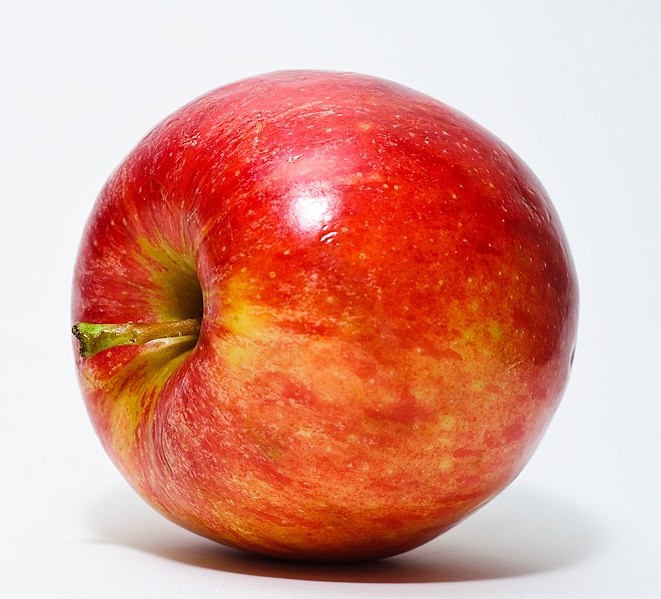
Cyanide occurs in nature in many benign plants like apple and orange seeds, almonds, apricot kernels, bamboo shoots and cassava. Some insects also release cyanide as a protective mechanism.
Tobacco smoke contains cyanide

Hydrogen cyanide is present in tobacco and wood smoke, and burning plastic can send off enough of the toxic gas to make people sick or even kill.  A hydrogen cyanide concentration of 300 mg/m3 in the air will kill in as little as 10 minutes.

A hundred grams (about a quarter of a pound) of dried, crushed apple seeds yields about 50-70 mg of cyanide, which is enough to kill. But that's a lot of apples! Maybe your murderer could be a pie baker or a cider-maker....hmmm.


Cyanide kills by preventing the body from absorbing oxygen. The victim will first feel a headache, dizziness, vertigo and confusion. 
They will then have difficulty breathing and lose consciousness before suffering cardiac arrest. The face may turn a cherry red. A fatal dose for humans can be as low as 1.5 mg/kg body weight.
Apple seeds contain cyanide

The most common antidote, which must be administered immediately, is amyl nitrate, followed by intravenous sodium nitrate and sodium thiosulfate. 

It was first isolated as a component of the blue pigment, "Prussian blue" and sodium cyanide and potassium cyanide have been used for centuries in gold and silver mining and for electroplating. Cyanide has been long used as a pesticide, and has many industrial applications, including photography processes, like sepia toning. (So maybe the wedding photographer is the murderer?)

Bitter almonds contain 42 X the cyanide of sweet almonds 

Probably because it acts so fast, it's one of the most popular poisons with mystery writers. Agatha Christie used it in numerous novels, including Sparkling Cyanide and And Then There Were None. Raymond Chandler used it in The Little Sister and Ngaio Marsh used it in Death at the Bar.

In the Doctor Who episode about Agatha Christie, The Unicorn and the Wasp, the Doctor himself is poisoned with cyanide, but with his Gallifreyan metabolism, he was able to detoxify himself. 


Some people think the fictional poison "the Strangler" in Game of Thrones is based on cyanide, although others think it's more like strychnine. 

Do you have a favorite poisoning mystery? What poison was used? 

Other Posts in this Series


This week we have a very special deal. The first three books in the Camilla Randall series are available for 99c--that's 33c per book!

Camilla-Box=LargeTHE CAMILLA RANDALL MYSTERIES

Ghostwriters in the Sky, Sherwood, Ltd. and The Best Revenge in a boxed set.

"Delicious wit, wonderful eccentric characters, and a beguiling plot. Camilla Randall is a delight!"...Melodie Campbell, "Canada's Queen of Comedy."

These mysteries are a laugh-out-loud mashup of romantic comedy, crime fiction, and satire: Dorothy Parker meets Dorothy L. Sayers. Perennially down-and-out socialite Camilla Randall a.k.a. "The Manners Doctor" is a magnet for murder, mayhem and Mr. Wrong, but she always solves the mystery in her quirky, but oh-so-polite way. Usually with more than a little help from her gay best friend, Plantagenet Smith.

99c or the equivalent from:

And it's at the regular price of $3.99 at these retailers: 


Friday, May 27, 2016

Poisoning People for Fun and Profit: Part 6—Oleander


Ancient Roman painting of Oleander
Oleander (Nerium Oleander) is a lovely flowering shrub that grows in subtropical climates all over the world. It's native to Mediterranean countries and was favored by ancient Roman gardeners. It features in paintings in the 2000-year-old House of Livia. 


It's also so hardy that it is grown on the median strips of California highways. But beware! It's highly toxic to humans and most mammals. Its leaves, flowers and fruit contain cardiac glycosides, which cause death by heart attack.

Nerium Oleander

There's an urban legend that's been around for about a century that tells of a camping family (or scout troop) who roast hot dogs (sometimes marshmallows) over a fire on sticks taken from a nearby oleander bush. The next day they are all found dead. But there's no evidence this mass-death via roasting food on Oleander sticks ever happened. 

Snopes reports that a study done in 2005 using hot dogs roasted on fresh Oleander sticks, found only 1.5 mg of oleandrin in the roasted hot dog. It's enough to make someone sick, but it wouldn't kill.

However, many people have become sick or even died from chewing on the leaves or flowers. A California woman was charged with murder in  2001 after her husband ingested Oleander mixed with antifreeze. And the death of two boys in Los Angeles in 2000 was attributed to chewing oleander leaves. Chewing on even one leaf can make a person very ill. Even inhaling the smoke from burning Oleander can be lethal.

White Oleander, the plant
Unfortunately horses are drawn to it as well, because of its sweet smell and taste. Only 100 g will kill an adult horse. It also kills sheep and cattle. 

They display the same symptoms as a poisoned human: the victim will suffer severe gastric distress, irregular heartbeat, dizziness, blurred vision and lethargy. Victims can survive if vomiting is induced and they are given medication (often charcoal based) and intravenous liquids in a reasonable amount of time.

Oleander is used as a poison in the 1999 novel White Oleander

White Oleander, the film
by Janet Fitch (made into a film in 2002, starring Michelle Pfeiffer, Rene Zellweger, Alison Lohman, and Robin Wright). Her villain uses a chemical to make the oleander stick to the victim's skin.

However, not many lethal doses of oleander poisoning through the skin have been documented. (But that doesn't mean they haven't happened. Apparently it would be hard to detect, which is why it makes a good plot device.)

I'm thinking of using oleander in my next Camilla mystery. It's so ubiquitous in California that any of the suspects would have access. The flowers are reputed to be sweet, so they might go in a nice fresh salad....

What about you, readers, do you know of any other books that feature oleander poisoning?


Other Posts in this Series


FOOD OF LOVE: a Comedy about Friendship, Chocolate, and a Small Nuclear Bomb.


There's also some poison involved: epibatidine, which comes from the South American Poison Dart Frog. I'll be talking about that in another post in the series. 


Food of Love (2)
Two sisters: one white, one black. Two worldviews: one liberal, one conservative. But these two women have one goal in common—one they share with most women in modern society: the urge to diminish themselves by dieting. Food of Love is a historical comedy-mystery-romance set in the 1990s that carries a powerful message. It offers some of life’s darker truths—told with a punchline.

After Princess Regina, a former supermodel, is ridiculed in the tabloids for gaining weight, someone tries to kill her. She suspects her royal husband wants to be rid of her, now she’s no longer model-thin. As she flees the mysterious assassin, she discovers the world thinks she is dead, and seeks refuge with the only person she can trust: her long-estranged foster sister, Rev. Cady Stanton, a right-wing talk show host who has romantic and weight issues of her own. Cady delves into Regina’s past and discovers Regina’s long-lost love, as well as dark secrets that connect them all.

Available in eBook from:
Available in Audiobook from:


Friday, May 20, 2016

Poisoning People for Fun and Profit--Part 5: Arsenic


Arsenic used to be the bread and butter of poisons. Probably more classic mystery novels rely on it than any other. In the 19th century it could be found in pretty much every household, since rats and other vermin were a constant problem. 

People could buy it without anybody suspecting them of planning to do in their rich, cranky Great-Aunt Augusta.


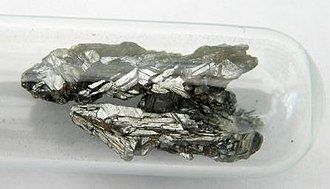
Arsenic in its pure form

And best of all, the science didn't exist to detect it.

Historical mystery author Linda Stratmann has written a fascinating book on the Victorians and poison called "The Secret Poisoner: A Century of Murder" In a recent interview with Kelly Faircloth in Jezebel, she said murder by poison was much feared by the Victorians for several reasons: 

"First of all, you could be murdered by your nearest and dearest. Now that was scary, you see. You might not be the sort of person who’d go out and get drunk and get into a fight, but you could still be poisoned by your cook. You could fear absolutely anybody, even people who ought to be powerless, like servants or your wife or your children. The other thing that people really feared about poison was the fact that poison attacks you from within. You can’t run away from it. You can’t fight back."


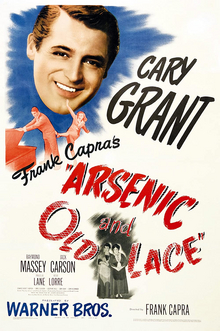
My favorite mystery involving arsenic is the daffy comic play by Joseph Kesselring, Arsenic and Old Lace. My one regret in giving up my acting career to write is that I never got to play one of the murderous old dears in that play. I love the classic film starring Cary Grant as the ladies' nephew Mortimer Brewster. (Fun fact: the part was first offered to Ronald Reagan.)  


Unlike the first four entries in my poison series, arsenic is not an organic compound. It's a metal. An elemental metal, as a matter of fact, like gold and silver. It's represented by the symbol "As" and has an atomic weight of 74.9216. For centuries it was mostly used for killing rats and treating lumber. But it has 21st century uses too. Combined with gallium, it forms a semiconductor used in high-speed integrated circuits for supercomputers and cell phones.

It is super-toxic in all forms and its effects are cumulative. So people can be poisoned over a long period of time.

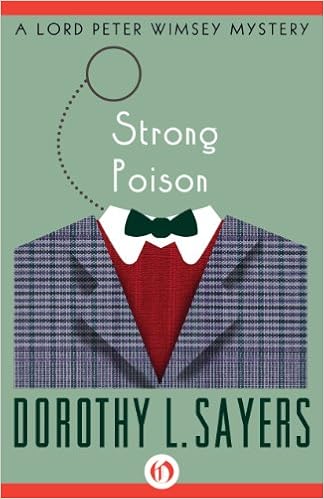
Arsenic is the murder weapon in one of my favorite mysteries, Dorothy L. Sayers' Strong Poison. But Ms. Sayers wrongly has the murderer make himself immune to arsenic by taking tiny doses and building up immunity over time. Modern science shows this isn't possible, since metals are not eliminated by the body and the arsenic would have killed him, rather than make him immune. 

I'm sure Ms. Sayers, who read Classics and Medieval Literature at Oxford, took her information from Livy or Pliny the Elder, who both told the tale of the ancient king Mithridates. The stories said the king—one of Rome's most formidable enemies—regularly took arsenic and other poisons in tiny doses to make himself immune to poison.

Mithridates VI of Pontus
Mithridates VI, who ruled Pontus (in modern Turkey) from 135–63 BC, also seems to have had a forward-looking hairdresser. His swirly locks shown in this statue could contend with those of a contemporary American Presidential hopeful. Or maybe he has a vampire possum on his head. 

But if the king did indulge in the poison-inoculating regime that's now called "mithridatism," arsenic probably wouldn't have been an ingredient, since it would have killed him eventually. And as we know from A. E. Housman, Mithridates, he died old.  


From A. E. Housman's poem, 
Terence this is Stupid Stuff

There was a king reigned in the East:
There, when kings will sit to feast, 
They get their fill before they think 
With poisoned meat and poisoned drink. 
He gathered all that springs to birth 
From the many-venomed earth; 
First a little, thence to more, 
He sampled all her killing store; 
And easy, smiling, seasoned sound, 
Sate the king when healths went round. 
They put arsenic in his meat 
And stared aghast to watch him eat; 
They poured strychnine in his cup 
And shook to see him drink it up: 
They shook, they stared as white's their shirt: 
Them it was their poison hurt. 
—I tell the tale that I heard told.
Mithridates, he died old.


What about you, readers? Do you find arsenic makes a good murder weapon for mysteries? What mysteries can you name that use arsenic? 

Other Posts in this Series


FOOD OF LOVE: a Comedy about Friendship, Chocolate, and a Small Nuclear Bomb.


There's also some poison involved: epibatidine, which comes from the South American Poison Dart Frog. I'll be talking about that in another post in the series. 


Food of Love (2)
Two sisters: one white, one black. Two worldviews: one liberal, one conservative. But these two women have one goal in common—one they share with most women in modern society: the urge to diminish themselves by dieting. Food of Love is a historical comedy-mystery-romance set in the 1990s that carries a powerful message. It offers some of life’s darker truths—told with a punchline.

After Princess Regina, a former supermodel, is ridiculed in the tabloids for gaining weight, someone tries to kill her. She suspects her royal husband wants to be rid of her, now she’s no longer model-thin. As she flees the mysterious assassin, she discovers the world thinks she is dead, and seeks refuge with the only person she can trust: her long-estranged foster sister, Rev. Cady Stanton, a right-wing talk show host who has romantic and weight issues of her own. Cady delves into Regina’s past and discovers Regina’s long-lost love, as well as dark secrets that connect them all.

Available in eBook from:
Available in Audiobook from:


Friday, May 13, 2016

Poisoning People for Fun and Profit--Part 4: Poison Dart Frogs


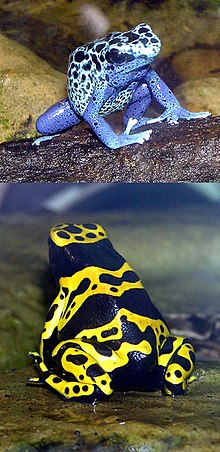
Poison Dart Frogs (Dendrobatidae), also called poison arrow frogs, are native to Central and South America and can produce some of the world's most toxic poisons (batrachotoxins). BBC Earth calls these cute little guys "the most poisonous animals alive." The amphibians got their name because some South American indigenous tribes use their secretions to poison their darts and arrows.  

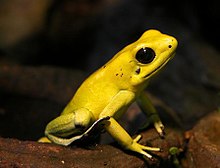
The deadly golden poison arrow frog
The frogs are poisonous, but not venomous. Their poison is not injected into victims, like snake venom, but is produced by glands in the frog's skin as a protective device. Native peoples extract it through slow-cooking the skin over a fire. The rendered secretions are potent for several years after harvesting. The toxin prevents victim's nerves from transmitting impulses, leaving the muscles in an inactive state of contraction. This can lead to heart failure.

But not all frogs of the family are poisonous, and only three species are seriously dangerous to humans. The most deadly species is the golden poison arrow frog (Phyllobates terribilis). The poison in one frog can kill ten people. They're found in Colombia along the western slopes of the Andes. 

I used this poison in my novel Food of Love to lead investigators away from their initial suspect, a retired school teacher and DAR president from Boston, to a hairdresser who's also an assassin for a Columbian drug cartel. (Yes, the novel is a comedy.)

In 1974, a researcher named James Daly isolated the poison epibatidine in an Ecuadorian species of dendrobatidae known as Anthony's Poison Dart Frog. There was great hope the chemical could be used as a medicinal painkiller that wouldn't have the addictive side effects of morphine.

Unfortunately, the line between a fatal dose and a therapeutic dose turned out to be too thin to be worth the risk.

The frog's bright colors warn predators of the danger of eating them. (They are toxic to all species except one particular snake native to rainforests--I guess everybody needs a nemesis.) But many non-poisonous frogs mimic their beautiful coloring to deter predators. 

Trying to find epibatadine or any form of the batrachotoxins would be a little tough for the average murderer, however. They'd have to have some besties in the native populations of Central America or work in a highly specialized lab that might still harbor some epibatadine. (The studies of the medicinal properties were halted in the 1990s.) 

And strangely enough, these deadly frogs are not poisonous in captivity. Scientists believe they get their poison from specific insects that they eat in the wild. These insects most likely acquire the poison from their plant diet.

So there's no point in raising the little guys for their murderous properties. Unless maybe you're a supervillain who has a frog-breeding greenhouse where you can also support all those plants and insects the frogs normally hang out with on their own turf. But, hey, it might help preserve the species, which has become endangered as their rainforest habitat disappears. So if you're a supervillain do keep that in mind. Haha.

And they sure are cute little critters, aren't they? 

Have you read any stories of people killed by poison dart frogs?  
for more of this series here are the other entries:
Part 1: Digitalis
Part 2: Wolfsbane
Part 3: Hemlock


FOOD OF LOVE: a Comedy about Friendship, Chocolate, and a Small Nuclear Bomb.


There's also some poison involved: epibatidine, which comes from the South American Poison Dart Frog. I'll be talking about that in another post in the series. 


Food of Love (2)
Two sisters: one white, one black. Two worldviews: one liberal, one conservative. But these two women have one goal in common—one they share with most women in modern society: the urge to diminish themselves by dieting. Food of Love is a historical comedy-mystery-romance set in the 1990s that carries a powerful message. It offers some of life’s darker truths—told with a punchline.

After Princess Regina, a former supermodel, is ridiculed in the tabloids for gaining weight, someone tries to kill her. She suspects her royal husband wants to be rid of her, now she’s no longer model-thin. As she flees the mysterious assassin, she discovers the world thinks she is dead, and seeks refuge with the only person she can trust: her long-estranged foster sister, Rev. Cady Stanton, a right-wing talk show host who has romantic and weight issues of her own. Cady delves into Regina’s past and discovers Regina’s long-lost love, as well as dark secrets that connect them all.

Available in eBook from:
Available in Audiobook from:

Friday, May 6, 2016

Poisoning People for Fun and Profit—Part 3: Hemlock


Hemlock (Conium maculatum) is most famous as the poison used to kill the Greek Philosopher Socrates in 399 BC. 

He was fed a strong infusion of hemlock by the democratic government of Athens to punish him for "impiety," which modern scholars tend to read as "political infighting." 

Hemlock is an especially nasty poison, since it paralyzes the victim first, so they know what is going on but can't speak or move.

It's another deceptively pretty plant, with lacy white flowers that resemble Queen Anne's Lace. It is native to Europe, Western Asia, and North Africa, but can now be found almost everywhere. It thrives in a Mediterranean climate and loves poorly drained ditches, roadways and stream beds.


Hemlock is deceptively pretty

In Ireland it's called "Poison Parsley" and in Australia it's called "Carrot Fern". 

It's in no way related to the evergreen, coniferous tree that's also called "Hemlock" (Tsuga) which is the only hemlock I knew when I was growing up in New England. Apparently the hemlock tree's needles, when crushed, give off a similar scent to the toxic hemlock shrub.


This kind of hemlock is nor related to the poisonous kind
As a kid, I had a hard time picturing Socrates being forced to eat pine cones.

But now that I live on the Central Coast of California, I see the poisonous type of hemlock everywhere. It grows all over Montana de Oro, the state park that's just up the road from me. Hemlock is flourishing there now, after the winter rains. The plants can reach 3-5 feet in a good, wet year. 


I'm thinking of using it in the next Camilla mystery, since hemlock would be so handy now Camilla is staying in the Central Coast area.


Apparently hemlock is a good deal less potent in dried form, but six fresh-cut leaves can kill a person and the fresh seeds and roots are even more toxic. Socrates was probably fed a tea made of an infusion of the roots and leaves. 


The Death of Socrates by Jacques-Louis David

Hemlock works like another nasty poison, curare, in that it paralyzes the muscles, which eventually leads to paralysis of the lungs and respiratory failure, so the victim dies of suffocation. But death is not quick and drinking hemlock tea only makes a person feel drunk at first. It can take up to 72 hours for the toxins to stop lung function..

This means a victim can be saved if they get to a hospital in time to be put on a ventilator that allows them to breathe. It takes several days on a ventilator for the poison to leave the system. 


For more on Hemlock on the Central Coast of California, see this article from The Cambrian by Kathe Tanner.

I haven't used hemlock in a mystery yet, although it does seem to beg to make it into my Central Coast mysteries. I can't think of a mystery novel where hemlock is used. Does anybody out there know of one?


for more of this series: 
Part 1: Digitalis
Part 2: Wolfsbane

FOOD OF LOVE: a Comedy about Friendship, Chocolate, and a Small Nuclear Bomb.


There's also some poison involved: epibatidine, which comes from the South American Poison Dart Frog. I'll be talking about that in another post in the series. 


Two sisters: one white, one black. Two worldviews: one liberal, one conservative. But these two women have one goal in common—one they share with most women in modern society: the urge to diminish themselves by dieting. Food of Love is a historical comedy-mystery-romance set in the 1990s that carries a powerful message. It offers some of life’s darker truths—told with a punchline.

After Princess Regina, a former supermodel, is ridiculed in the tabloids for gaining weight, someone tries to kill her. She suspects her royal husband wants to be rid of her, now she’s no longer model-thin. As she flees the mysterious assassin, she discovers the world thinks she is dead, and seeks refuge with the only person she can trust: her long-estranged foster sister, Rev. Cady Stanton, a right-wing talk show host who has romantic and weight issues of her own. Cady delves into Regina’s past and discovers Regina’s long-lost love, as well as dark secrets that connect them all.

Available in eBook from:
Available in Audiobook from: