Showing posts with label Poisoning People for Fun and Profit. Show all posts

Friday, July 27, 2018

Sleeping Pills—Poisoning People for Fun and Profit #36.


Sleeping pills used to be a reliable way of putting nasty Great-Aunt Augusta out of your misery if you were a financially embarrassed heir who was afraid the old dear was about to change her will and leave all her millions to her pet hedgehog. 

"Flaming June" by Fredrick Lord Leighton
If she had a prescription for them, it would be tough for the police to tell a murder from an accidental overdose, so they came in very handy.

But sedatives have become much safer in recent years. The dangerous barbiturates of the late 19th and early 20th century have largely been supplanted by benzodiazepines. (The first benzodiazepine, Librium, was invented in 1955.)

In the 21st century the newer “Z-drugs” are usually the sleeping pills of choice.

Death from benzodiazepine or Z-drug overdoses alone isn’t common, but when they’re combined with alcohol, antidepressants, or opioids, there’s a much higher risk of overdose. And the elderly and people with chronic illnesses are especially vulnerable to lethal overdoses.


So if Great-Aunt Augusta is suffering from a chronic ailment, that Ambien or Xanax she takes might work just as well as the old-fashioned phenobarbital or Seconal if you put a high dose in her evening snack. Especially if she enjoys a bit of a tipple before bed.

Z-Drugs


Zolpidem (Ambien), Eszopiclone (Lunesta) and, and zaleplon (Sonata) are non-benzodiazepine drugs used in the treatment of insomnia and commonly referred to as the “Z-drugs.” 

Z drugs are typically used to assist people who have a hard time falling asleep, rather than ones who wake frequently. They act on the central nervous system (CNS) and reduce heart rate (the number of times the heart beats per minute), and increase shallow breathing both of which are controlled by the CNS. 

They induce sleep but don’t treat anxiety. And they’re very short lived. They leave the body within an hour or two.

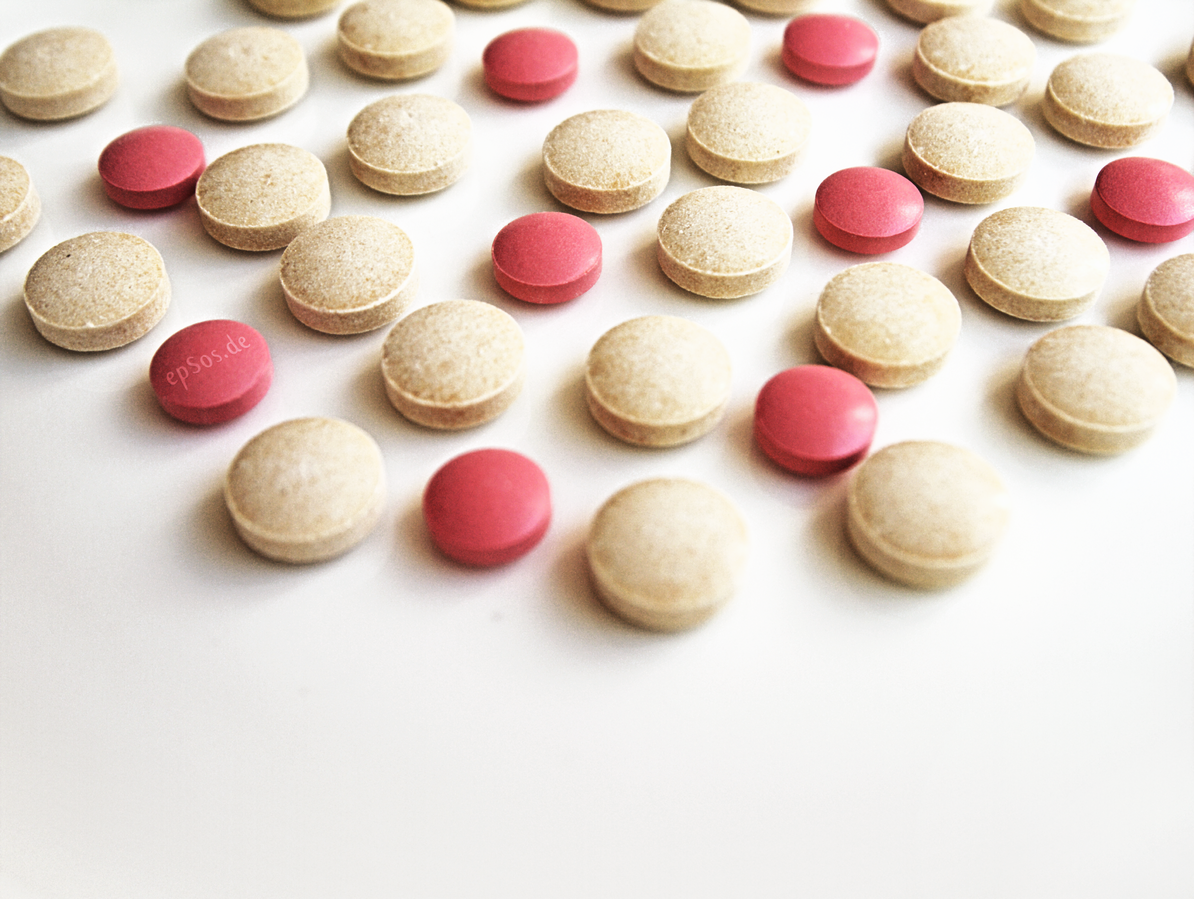
Poisoning somebody with Z-drugs would take rather a lot of pills. One Ambien tablet is usually 10 milligrams. 600 mg could kill somebody in fragile health, but 2,000 mg would be necessary to make sure the job was done.

An overdose of Lunesta can happen at approximately at about 270 mg. and it takes about 200mg. of Sonata. But people have been known to survive that dosage if alcohol isn’t involved.

But it’s good to note that any number of sleeping pills over the recommended dose can kill under the right circumstances. They shut down the respiratory center and people simply stop breathing.


Benzodiazepines


Benzodiazepines (Librium, Ativan, Valium, Xanax) are named because of their actions on the benzodiazepine receptors located in the brain. They act in pretty much the same way as the Z-drugs, but they're less likely to affect other systems in the body.

They're also much more effective in treating anxiety.

Unfortunately they can be drugs of abuse, because it’s easy to build a tolerance for them. The FDA reported that in 2013, benzodiazepines were involved in 31% of the estimated 22,767 deaths from prescription drug overdose in the United States, usually caused by a combination of benzodiazepines with opioids.

Following an overdose of a benzodiazepine, symptoms kick in within 4 hours. Victims tend to appear drunk, with impaired balance, slurred speech, and uncontrolled muscle function. They also can show “paradoxical” symptoms like anxiety and aggression. Sometimes they’ll also suffer nausea and vomiting.

Barbiturates


The old fashioned barbiturates like Nembutal, phenobarbital, and Seconal are still in use, although they're no longer prescribed as sedatives.

They're used for general anesthesia, epilepsy, acute migraines, and cluster headaches. Veterinarians use them for euthanasia of small animals.

And they’re still one of the most abused drugs around. In 2007, the Lancet listed them third in terms of physical harm, fourth in terms of social harm and fifth in dependence.

They are highly addictive and the patient can become addicted within a month. They are a commonly sought-after street drug, since they give a feeling of well-being.

During the first part of the 20th century – especially during the 1930s and 1940s – barbiturates were popular prescription “wonder” drugs, prescribed for everything from autism to epilepsy. It’s estimated that in 1939 over 2.2 million doses were sold in the US. By 1945, that number had nearly tripled. 

"Sleeping Beauty" by Victor Gabriel Gilbert

But the number of barbiturate prescriptions have decreased significantly since the 1970s. 

Death due to acute barbiturate poisoning typically occurs because of a stoppage in breathing. Like other CNS depressants, barbiturates suppress respiration. This is especially true – and especially hazardous – when they are taken in combination with other depressants like alcohol or opioids.

Symptoms of an overdose again mimic drunkenness: staggering, difficulty in thinking, slurred speech, faulty judgement, and drowsiness.

A lot of celebrities of the era died of barbiturate poisoning, either accidental or self-inflicted. Judy Garland, Marilyn Monroe, and Jimi Hendrix all died of barbiturate overdoses. So did columnist Dorothy Kilgallen—although a number of conspiracy theorists of the Nixon era suspected murder in her case.

Antidote


Flumazenil (Romazicon) is a competitive benzodiazepine "receptor antagonist" that can be used as an antidote for both Z-drug and benzodiazepine overdose. But the drug is controversial since it can cause a number of dangerous side effects. 

Here's a list of all the poisons in this series

BOOK OF THE MONTH

ONLY 99C!!!

GHOSTWRITERS IN THE SKY:  Camilla Mystery #1 

After her celebrity ex-husband’s ironic joke about her “kinky sex habits” is misquoted in a tabloid, New York etiquette columnist Camilla Randall’s life unravels in bad late night TV jokes.

Nearly broke and down to her last Hermes scarf, she accepts an invitation to a Z-list Writers’ Conference in the wine-and-cowboy town of Santa Ynez, California, where, unfortunately, a cross-dressing dominatrix named Marva plies her trade by impersonating Camilla.

When a ghostwriter’s plot to blackmail celebrities with faked evidence leads to murder, Camilla must team up with Marva to stop the killer from striking again.

Ghostwriters in the Sky is available in e-book at all the Amazons iTunesGooglePlay  KoboInkteraScribd and NOOK.

It is available in paper at Amazon & Barnes and Noble 


Friday, June 29, 2018

A Serial Killer Poisoned the Lunches of 23 Co-Workers—Why?

Most of the poisonings I've talked about in this blog are old news: Victorians poisoning their families with strychnine and 1920s housewives using household rat poison as an alternative to divorce court.

But this week a new and spectacular case of serial poisoning has made the international news.

A 56-year old man identified as “Klaus O.” of Schloss Holte-Stukenbrock in northwestern Germany was arrested in May for poisoning the lunch of a colleague. The engineering worker is also suspected of killing 21 more of his co-workers at a metal fittings company over a period of 18 years. Two other possible victims are alive but on life support.

Klaus was caught on camera adding a mysterious white powder to his co-worker’s lunch.

The intended victim had sensed something “funny” in his lunch and told his boss, who wisely called authorities. They studied the company’s security footage and caught the culprit red-handed, sprinkling a whitish powder into the man’s sandwich. 


The village of Schloss Holte-Stukenbrock, where Karl O. perpetrated his crimes

At first the police thought the food tampering was just a prank, but when they tested the food, they found it had been laced with lead acetate.

Lead acetate—once known as "sugar of lead"—is colorless and not unpleasant in taste. (It's slightly sweet.) But it's highly toxic. It would have caused organ failure and likely the death of the victim, had he finished his sandwich.

When the police investigated Klaus O’s home, they found a home poison-making lab equipped with mercury, lead and cadmium.
He poisoned the sandwich with Lead Acetate 


They also discovered there had been 21 mysteriously premature deaths at the company since 2000 and are now investigating them as possible homicides.

A number of the victims died young of cancer or heart attacks, which could have been the result of heavy metal poisoning. Two other possible victims are still alive, b
ut one is in a coma and another on dialysis, according to Deutsche Welle

They report that the authorities are considering exhuming all 21 bodies.

But there is no information on the possible motive of this model employee of 38 years, whom the personnel manager called “conspicuously inconspicuous.” A colleague said that Klaus “always stayed by himself, did not speak and had no friends.”

Quiet serial killers in Arsenic and Old Lace.


It’s always the quiet ones, isn’t it?

Klaus has refused to comment since his arrest. But this story could provide a fascinating challenge for mystery novelists, couldn’t it? I can imagine a mashup of The Secret Life of Walter Mitty and Arsenic and Old Lace.

The quiet Klaus Ordinary takes the everyday bullying and jostling for power that happens in the workplace, and then one day decides to deal with the guy who’s been stealing his lunch by adding a little “something extra” to the sandwich.

When his victim drops dead of a heart attack and nobody suspects foul play, Mr. O. is emboldened. He decides to deal with the nasty woman in supplies who has refused to upgrade his squeaky uncomfortable chair. And that whiny one who is always claiming he gave her a cold, when he really only had an allergy attack. Then there’s the guy who took all the credit for the project they did as a team...and it's so easy.

A Homicidal Walter Mitty? 
He keeps working at the same job. 38 years. Because hey, there are no nasty bullies or whiners at the company anymore. He’s eliminated them all. 


A lot of us have probably fantasized about solving office problems that way. 

What about you? Does anybody have a scenario to suggest that would cause a quiet man like Klaus O. to become a serial poisoner?


SALE!

No Place Like Home: Camilla Randall Comedy-Mystery #4
(But it can be read as a stand-alone)

SALE! 99c on All the Amazons until July 15th

Wealthy Doria Windsor is suddenly homeless and accused of a murder she didn't commit. But Camilla, with the help of a brave trio of homeless people, the adorable Mr. X, and a little dog named Toto, is determined to unmask the real killer and discover the dark secrets of Doria’s deceased “financial wizard” husband before Doria is killed herself.

"A warp-speed, lighthearted comedy-mystery"...Abigail Padgett
"A fun, charming novel about the rich and less so" ...Karen Doering
"A cross of dry British humor and American wackiness, and it all adds up to a fun read." ...Deborah Bayles.
"It's comedy about a dark topic – homelessness – and it succeeds without ever descending into tasteless insensitivity, or tipping over into sentimentality."...Lucinda Elliot
Available at all the Amazons and NOOK Page Foundry, Kobo and iTunes It's also available in paperback from Amazon US, Amazon UK, and Barnes and Noble, in regular and LARGE PRINT. LARGE PRINT is also available at Barnes and Noble.
And NO PLACE LIKE HOME IS ALSO  AN AUDIOBOOK!!
Narrated by award-winner C. S. Perryess and Anne R. Allen (as Camilla)
Nearly 8 hours of hilarious entertainment!Only $1.99 if you buy the Kindle ebook

Friday, January 26, 2018

Opium Poppies: Poisoning People for Fun and Profit #31


Poppies are lovely flowers that can add a big splash of color to a garden.

But one poppy papaver somniferum—the opium poppy—is poisonous to humans. (Other poppies, like the Icelandic and Flanders poppies, can be poisonous to horses, cattle and sheep, but not humans.)

The opium seeds, however, contain very little toxic or narcotic properties. They are often used in baking, especially on bagels and muffins, and cooking eliminates most of the trace toxins. (Not enough to pass a drug test, though, so don't eat poppy seeds if you know you're going to be tested.)

Don't eat the poppy seed bagel if you're getting a drug test
People can safely eat one teaspoon of raw poppy seeds for every seven pounds of body weight. That means, according to Nutritionfacts.org, that someone weighing about 150 pounds can eat seven tablespoons of raw poppy seeds at a time without ill effects.

Opium Poppy Sap


It's the white sap (called "latex') from the living plant contains that the dangerous alkaloid compound that can kill you (or, used properly, kill pain.) The latex is especially concentrated in the plant's fruit. But eating any part of the plant other than the seeds can be fatal.

Symptom of poppy poisoning are stupor, contracted pupils, slow breathing, respiratory and circulatory depression, coma and eventually, death.

That poppy latex is also the source of the drugs opium, morphine and codeine, which have been the world's preferred painkillers for at least four millennia.

Opium Poppy History


Pictures of the opium poppy have been found in artifacts from ancient Sumer. The Sumerian culture emerged in the Tigris-Euphrates region around 5000 BC.

We also know that ancient Greeks used it for its painkilling properties, who used the dried sap or "juice" as a painkiller. In fact, the word "opium" is derived from the Greek word for juice: "opos." Opium is the dried sap that is generally extracted from the poppy's fruit.
Paracelsus invented Laudanum

Opioids have been a boon to humanity ever since, since they deaden pain and induce sleep.
The name "papaver somniferum" means "sleep inducing poppy" from the Latin word for sleep, "somnum."

In the 16th century, the alchemist Paracelsus discovered that opium could be dissolved in alcohol to form a tincture that had many medicinal properties.  He called it laudanum.  By the 19th century, laudanum became a household remedy for everything from menstrual cramps and intestinal disorders to coughs and colds. It was used in many patent medicines and sold without a prescription until the early 20th century.

Control of Opioids


The addictive properties of laudanum and other opioids were not considered serious for many years, but in 1914, the US passed the Harrison Narcotics Act, which of 1914 restricted the manufacture and distribution of opiates, including laudanum.

The cultivation of the poppies themselves was banned in the US in 1942, even for California farmers growing poppy seeds as food. And in 1987, Thomas Jefferson's home, Monticello, was raided, his garden of heirloom opium poppies destroyed, along with all tee-shirts and other souvenirs that depicted the plant.

Gotta watch out for those opioid tee-shirts.

Cultivation of opium poppies is also banned in Canada and Australia, although it's legal in the UK for ornamental and food purposes. That's also true in most of Europe. However the poppies are banned in many Middle Eastern countries and in the United Arab Emirates you can be sentenced to a long jail sentence for possessing so much as the crumb of a poppyseed roll.

In recent years, a number of variations on papaver somniferum have been developed that produce none of the opiate latex. Those are supposed to be legal to grow in the US, but they are still controversial. Poppy seeds are also available in many US gardening catalogues in the 21st century, and prosecutions for growing ornamental opium poppies are very rare.

Banning the plants has not, of course, done anything to stem the rise of opioid addiction and overdose deaths that has recently  become epidemic in the US.

It's important to note that most of these deaths are not caused by drugs derived from opium poppies. The most deadly drugs are heroin and fentanyl, which are synthetic, laboratory-produced opioids, which are far more powerful than anything derived from the plants.

The most deadly killer is fentanyl, a synthetic opioid that is over 100 times stronger than morphine—the strongest drug derived from the opium poppy. Fentanyl is a relative newcomer—invented in 1960 and approved for use in the US in 1968. It is meant to be used in surgery, but because it's cheap to make, it has flooded the streets in recent years.

So the current "opioid epidemic" has little to do with the venerable opium poppy, and banning its cultivation won't do anything to stop the deaths.

But if you do run into a real opium poppy, don't eat it.

However, your mystery novel's villain might consider feeding it in a salad to Great Aunt Agatha, the nasty old bird whose estate will come to the villain as soon as the old Aggie kicks the bucket. This could even be the perfect murder if Aunt Agatha is already taking an opioid like oxycodone after her recent dental implant surgery…

Did you know that the poppy seeds on your bagel were related to opium poppies? Do you know anybody who has tested positive for drugs when the only drug they had was a lemon poppyseed muffin?


BOOK OF THE MONTH 

3 Hilarious Novels for Only $1.33 Each! 

THE CAMILLA RANDALL MYSTERIESGhostwriters in the Sky, Sherwood, Ltd. and The Best Revenge in one a bargain box set for only $3.99 at most retailers.


The Camilla Randall Mysteries Box set is available at all the AmazonsKoboiTunesSmashwordsGoogle PlayInkteraNOOK24 Symbols and Scribd


Sample Reviews:

"Anne Allen had me laughing unexpectedly and sometimes out loud with her wonderful crafting of her words into sentences that became alive and three dimensional throughout these stories." John Williamson

"These stories are so carefully crafted and so cleverly presented that virtually every page offers a unique insight, experience, or perspective, that grabs my attention, tickles my imagination, and makes me laugh out loud."--Bruce West


Friday, August 25, 2017

Antimony—Poisoning People for Fun and Profit #29


Antimony is an element, a "metalloid" like arsenic. Its symbol in the periodic table of the elements is Sb, because it is most commonly found in the sulfide mineral stibnite

In the ancient world, stibnite was known as kohl. Egyptians famously used it for eye make-up. It was an important part of their culture as early as the Proto-dynastic Period (3100 BC ) They believed it protected the eyes from eye ailments and the glare of the sun.

Egyptians used antimony for eye make-up

Antimony compounds were often used for medicine. Pliny the Elder described several different compounds, which he designated "male" and "female" to be used in small doses for treatment of various ailments. 

But they were all known to be poisonous in larger doses. 


"The Monk-Killer"


In fact, the name antimony is said to come from the Greek word ἀντίμοναχός, anti-monachos. Which means "monk-killer". Some dispute this, but since compounds containing antimony can kill, the name makes sense.

Antimony by itself hasn't been proved to have a toxic effect on humans. It's the compounds that are the problem.
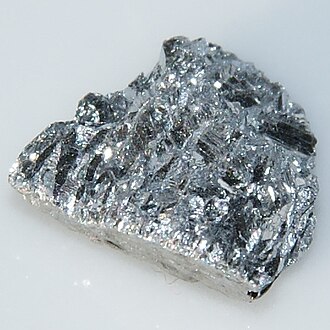
Antimony is rarely found in its pure metallic state


The thing is, antimony is rarely found in its pure isolated form. But it is part of many compounds, both natural and manufactured. A lot of those compounds are poisonous.

Inhaling antimony trioxide dust can cause a number of lung ailments, including lung cancer. And antimony chlorides are corrosive to skin. Scary stuff.


Symptoms and Treatment


Symptoms of an antimony overdose usually appear within 30 minutes of ingestion. There will be vomiting, sweating, diarrhea, and an acrid, metallic taste in the mouth. External exposure can cause skin irritation. Severe antimony poisoning has symptoms similar to arsenic poisoning.

Some people work in industries where they are at greater risk of exposure to antimony compounds, and the cumulative effect can cause health problems like skin irritation "antimony spots," lung irritation, and gastrointestinal problems. Port workers often come into contact with toxic levels of antimony because it is used in brake pads on the vehicles used for loading ships.

Treatment is the same as for arsenic and other heavy metal poisoning—gastric lavage if it has been ingested recently, then treatment with chelating agents that will bind with the metal so the body will eliminate it naturally. Three common drugs for treatment of metal poisoning are: BA. (Dimercaprol), Calcium EDTA (Calcium Disodium Versenate) and Penicillamine.


Uses of Antimony


Today antimony compounds are used in the manufacture of such varied products as flame retardant, polyester, safety matches, paint, glass art, and the manufacture of TV screens.

Combined with lead, antimony is used in lead-acid batteries, bullets, electrical cable sheathing, type (in printing machines), solder, pewter, and organ pipes.

In medicine, the antimony compound, Potassium antimonyl tartrate, or tartar emetic, was used as a treatment for parasitic infections in humans and animals for many years, although it has been replaced more recently.

Other antimony-based drugs, such as meglumine antimoniate, are still used in veterinary medicine for skin conditions and infections.


The Most Infamous Antimony Poisoning Case: Dr. Charles Bravo


The 1875 poisoning death of London barrister Charles Bravo, four months after he married his wealthy second wife, the scandalous Florence Ricardo, was one of the great unsolved mysteries of the Victorian era.

Bravo had been involved in scandal himself since he had fathered a child out of wedlock, and Florence had been shunned by her family for her extramarital affairs. 

Charles Bravo was poisoned with antimony
Charles Bravo was known as a bully and an abuser. His groomsman and housekeeper described him as a nasty employer.

Bravo's death by antimony poisoning (in the form of tartar emetic) was drawn out, lasting from two to three days, and painful. The strange thing about it was that he would do nothing to help his doctors find out the cause of his condition.

Many people thought he might have accidentally poisoned himself while trying to poison his wife, who had developed a mysterious chronic illness right after the wedding.

He himself was taking laudanum for a toothache, and the theory is that he mistakenly took the "medicine" he'd been giving his wife, and it killed him.

Apparently he told his housekeeper he had accidently taken the tartar emetic, but later changed his statement, perhaps in hopes of incriminating his wife.

But other investigators suspected the housekeeper herself of the murder. The unhappy groomsman was a suspect too.

The coroner held two inquests, and the details were considered to be so scandalous that women and children were banned from the room while Florence testified. The first had an inconclusive verdict. The second returned a verdict of murder.

But no one was ever arrested. Florence died two years later.


Books Inspired by the Bravo Case


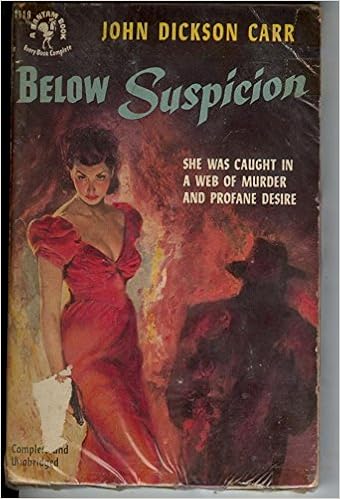
The first time I heard about the Bravo story was in reference to John Dickson Carr's classic Gideon Fell mystery from 1949 Below Suspicion.

Agatha Christie also refers to it in her Ordeal by Innocence

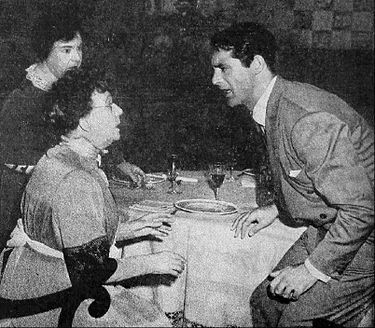
The 1948 Ray Milland film So Evil My Love (based on the novel by Marjorie Bowen) has elements of the story as well. 


Had you heard the story of Charles Bravo? Can you think of any other books or films where antimony is the murder weapon. Do you read John Dickson Carr? You don't hear much about him anymore. 

Here's a List of All the Posts in the Poison Series


Part 28: Mustard Gas

It's HERE! The New Camilla Randall Mystery

It's #6 in the series, but can be read as a stand-alone
At all the Amazons (FREE in KU)


Why does everyone think Camilla has the lost Portuguese crown jewels? And what has turned polite little Buckingham into an attack cat? Can Camilla keep her boyfriend Ronzo safe? Or will the murderous Mack Rattlebag find out Ronzo faked his own death?

It's one surprise after another in this warp-speed comedy-mystery where a too-perfect doctor may or may not be in cahoots with a bunch of homicidal New-Agers. Will Camilla and Ronzo, and the tarot cards, solve the mystery?

Friday, January 27, 2017

Poisoning People for Fun and Profit: Deadly Daffodils


Those pretty golden daffodils and their cousins, paperwhites, jonquils, and all the other members of the narcissus family are as dangerous as they are attractive.

Sort of like human narcissists.

 
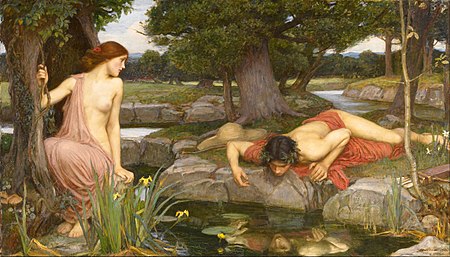
Echo and Narcissus by John Waterhouse
All parts of the narcissus are poisonous to humans—also to lot of animals, and even other flowers.

The symptoms are usually fairly minor allergic reactions like runny nose, itchy eyes, breathing difficulties, rash and hives, but in concentrated doses they can cause a numbness of the whole nervous system and eventually, paralysis of the heart. 

Because of the numbing effect, the ancients used narcissi as an anesthetic for wounded soldiers, but since dosage was unpredictable, Socrates was said to have called them, 'Chaplet of the infernal Gods'. You might feel better, but your heart could stop. Other cultures even believed they could cure baldness or serve as an aphrodisiac. (Maybe for people with zombie sex fantasies? 
Sounds like a really bad idea.)

Jonquils

The flowers contain some nasty alkaloids including masonin and homolycorin. These, together with calcium oxalate crystals cause nasty sores. People in the flower-growing and fragrance industries have to be very careful when dealing with them.

Florists can develop a kind of dermatitis they call "daffodil itch" from contact with the sap in the daffodil stems (which contain a concentration of calcium oxalate.) Doctors usually recommend a steroid cream or ointment for temporary relief, but suggest florists wear gloves to keep from re-infecting themselves.

But the most dangerous part of the plant isn't the flowers, but the bulbs. When eaten, the bulbs can cause nausea, vomiting, diarrhea, and abdominal pain as well as severe irritation of the mouth.

They are not good for livestock, either. In the Netherlands during the Second World War, starving cattle were fed daffodil bulbs and fatally poisoned.

Mostly people don't die of daffodil poisoning, but they do suffer severe symptoms. Daffodil poisoning generally happens when people eat the bulbs by mistake, thinking they were onions. Unfortunately, they're fast acting and you don't need to eat a lot of them to do severe damage. 

Narcissus
The UK website The Poison Garden has dozens of stories of people poisoned by daffodils after mistaking the bulbs for onions, occasionally on purpose.

Like the student who was so terrified he'd fail and exam that he ate a daffodil bulb so he'd get sick during the exam and was able to re-take the exam when he was better prepared.

And there's the story of the daughter in law who was pleased to find a bag of onions her mum-in-law had left, so she cooked them into a family meal. It wasn't until after dinner she listened to her voice mail where her mother in law asked if she'd planted the "daffs" yet, that she realized she felt a little queasy and maybe they should all
 make a visit to the hospital.
Paperwhites

In 2009 an elementary school in the UK used onions grown in the school's own vegetable garden to make soup in a class project. Unfortunately, a daffodil bulb got mixed in and most of the children got sick. Twelve children taken to hospital and others were treated at the school but they were all well enough to go home later the same day. But that was only one bulb.

I couldn't find any contemporary stories of people who died from eating daffodils. Mostly they just suffered a lot of unpleasant symptoms. There have been reports of dogs dying from ingesting daffodil bulbs, although this is rare.

But if you wanted to kill off somebody who was already frail, a daffodil or two in the stew might do the trick.


Here's a list of all the posts in the poison series


SHERWOOD, LTD: Camilla Mystery #2 (But it can be read as a stand-alone)
Ebook only $2.99!

Suddenly-homeless American manners expert Camilla Randall becomes a 21st century Maid Marian—living rough near the real Sherwood Forest with a band of outlaw English erotica publishers—led by a charming, self-styled Robin Hood who unfortunately may intend to kill her.

When Camilla is invited to publish a book of her columns with UK publisher Peter Sherwood, she lands in a gritty criminal world—far from the Merrie Olde England she envisions. The staff are ex-cons and the erotica is kinky. Hungry and penniless, she camps in a Wendy House built from pallets of porn while battling an epic flood, a mendacious American Renfaire wench, and the mysterious killer who may be Peter himself.

Sherwood, Ltd. is only $2.99 in ebook at all the Amazons, iTunes, GooglePlay Scribd, 24Symbols, Inktera, KoboNook, and Smashwords

It's also available in paper from Amazon and Barnes and Noble

Friday, November 25, 2016

Poisoning People for Fun and Profit—Part 23: My Past Life as a Poisoner


This poison series was sparked by my research for my WIP, The Queen of Staves, #6 in the Camilla Randall humorous mystery series, which will debut in June 2017.

     
Lucrezia Borgia
Yes, it was originally scheduled for last June and it's way overdue to my publisher. I'm making progress, but it's slow. I have a terrible habit of taking on new challenges, like learning about the Tarot. And poisons.

Research about poisons led to starting this series. Then I let myself get led astray by all these fascinating ways to get away with murder.

I've been intrigued by poisons ever since I had a bizarre experience under hypnosis twenty-five years ago when I was quitting smoking.

I went through a series of hypnosis sessions, and one involved going back in my memory to recall the first time I ever wanted a cigarette.

But the hypnotist's time machine apparently had a major glitch.

I didn't go back to that time at Girl Scout camp when three of us shared a Parliament pilfered from a camp counsellor's locker and I almost didn't throw up.

Or further back to when my kindergarten friends and I bought a pack of candy cigarettes at the corner market and came home to play dress-up in somebody's mom's old formals and high heels so we could pretend to be grown-up ladies. All the grown-up ladies we knew smoked cigarettes.

The Palazzo Farnese in Rome
No. I somehow I zoomed all the way back to the 15th century. So it wasn't exactly a memory, unless you believe in past lives. Which I didn't, until that moment.

Seriously. I'm not making this up.

The hypnotherapist asked me what I was wearing and I could feel a horrible corset thing constricting my torso and lots of stiff clothing weighing me down. My hair hurt with heavy jewelry and netting.

I was in a smallish room in an Italian palace.

Now I know my Italian palaces because I majored in Art History. Mostly so I could spend a lot of time in Italy looking at all those palaces that used to belong to families like the Borghese, Farnese, Barberini and of course, the infamous Borgias.

And there I was in my hypnotic state, standing in one of those palazzi.

But I wasn't enjoying myself in spite of the gorgeous setting. 
I felt cold. And anxious. Footsteps echoed in the hallway outside. I was awaiting the arrival of a man. My fiancé. He was returning from some battle and I was going to get hurt. So were a lot of other people. 

The man and I were enemies and my side had lost.

He stomped into the room—tall and handsome, with fierce, dark eyes and a thick beard. I gave him a big kiss and offered him some wine from a silver carafe. 

Alfonzo D'Este, Lucrezia's Husband #3

He drank and said something cruel and insulting, then drank some more. He kissed me again. I let him. Then I watched as he sat heavily on a brocade chair. 


I gave him more wine and started to feel less afraid.

I pretended to be worried as his face went pale and he grabbed his throat, which made a choking, gurgling sound.

He called for help, but his voice was weak. I pretended not to understand and started to smile as he tried to get up, but couldn't. My sense of relief was overwhelming.

I realized I was witnessing the last battle of whatever conflict raged between his people and mine.


And I was just about to win the war. 

I laughed while I watched the fury in his eyes turn to fear as life drained from his body.

The therapist brought me out of my trance. She looked distressed.

She said she'd just heard me give the most evil laugh she'd ever heard. The voice she'd heard laughing sounded nothing like mine.

I had no idea I'd been laughing out loud. 


She said nothing like it had ever happened in a hypnosis session and she'd been conducting them for twenty years.

There are people who would say I'd experienced a past-life regression. And that maybe I was somebody like Lucrezia Borgia in that past life.

But, as I said, I'm not sure I believe in past lives. And I certainly don't believe we were all famous people like Cleopatra and Ms. Borgia the way those past-life regression stories always go.

Besides, nobody knows that Lucrezia actually poisoned anybody. It's true that her daddy Pope Alexander VI was known for using poison to get what he wanted, which was pretty much everything in Southern Europe. 


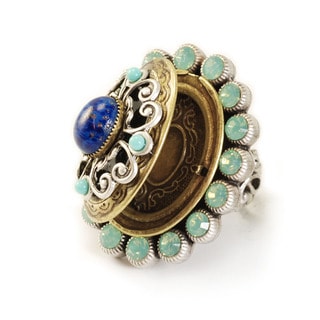
Lucrezia was rumored to wear a poison ring, with a hollow space under the stone just right for a dose of the Borgias' favorite poison, arsenic. The symptoms I saw in my hypnotic vision would have been consistent with arsenic poisoning.
Replica of a Renaissance poison ring


But poison rings were probably something of a fashion statement in Renaissance Italy, so we can't be sure. (They were actually designed to hold holy relics which were thought to protect the wearer from evil spirits.)

Many women of Lucrezia's station were known to use poison to get rid of the occasional inconvenient rival or unpleasant spouse. In Italy it was a tradition going back to ancient Rome, when poisonings were rampant. Women passed down poison lore from mother to daughter, and it gave them great power.

At that one moment in my trance, I felt that power. I have to admit it was exhilarating. I don't know when I have ever felt so powerful, before or since.

I have no idea what exactly I experienced. It wasn't as wildly surreal as a dream, but it was far more vivid, say, than envisioning a scene when I'm writing, even when I'm deep in "flow".

There was no control. I could only watch and hang on as I felt the emotions of this person—this psychopath, I suppose you'd call her—who certainly wasn't me. 

It was a little like being an actor achieving that moment when you totally inhabit your role and lose your sense of self.

Only I'd never read the script and had no idea what the character would say or do next. The actor's nightmare in reverse.

A week later, I quit smoking.

Do I have Lucrezia Borgia to thank for the fact I finally stopped poisoning myself with nicotine? I don't suppose I'll ever know.

What about you, readers? Have you ever had a "past life" experience? Do you think you could poison someone if the situation were dire enough? Do you think poisoning an enemy is more evil than shedding blood if you are mismatched as physical opponents?  


 99C SALE!  SHERWOOD, LTD: Camilla Mystery #2


Suddenly-homeless American manners expert Camilla Randall becomes a 21st century Maid Marian—living rough near the real Sherwood Forest with a band of outlaw English erotica publishers—led by a charming, self-styled Robin Hood who unfortunately may intend to poison her. 


Sherwood, Ltd. is only 99c in ebook from all the Amazons


It's also available on iTunesGooglePlay ScribdInkteraKobo, Nook, and Smashwords

And it's  $11.99 in paper from Amazon and Barnes and Noble

Sample Reviews:


"A wily tale of murder, deceit, and intrigue that can stand with the best of them. Her characters are all too real and her dialogue took me from laughter to chills" David Keith on Smashwords


"Smartly written and nearly impossible to put down, I found myself counting the hours until I could leave work and get back to reading! Well done!" T.L. Ingham on Smashwords


"An intriguing and fast paced novel that demands you read on to the next page and beyond. The characters are well constructed and believable and I enjoyed the difference between the USA and UK people. The plight of our heroine is complex and well -managed and in the beginning I was striving for her to find some genuine help and support. The flip over to the UK added more spice! Highly recommended."—David L. Atkinson, author of The 51st State.


Here's a list of all the posts in the poison series