Showing posts with label The Queen of Staves. Show all posts

Friday, May 24, 2019

How to Tell a Story: Follow the Rule of Three


Storytelling is an ancient art that takes lots of practice

Recently I’ve attended some local storytelling events—mostly ones that mimic the NPR “Moth” Radio Hour stories. People gather around to tell true stories about events they’ve experienced. Alcohol or caffeine may be involved. 

I say they “mimic” the Moth Radio Hour to be polite. It’s amazing how many people have no clue what storytelling is. They don’t know there's a world of difference between telling an entertaining story and blathering on about that time back in 1972 when you and your buddies dropped acid on that fishing trip and there was a bear…except it was a raccoon...and Fred thought it was a hat...and Kevin started singing the Davy Crockett song...and you got in a fight over whether Davy "kilt him a bear" or "built him a bar" when he was only three...

And eventually the bored crowd semi-politely claps you off the stage.

After a particularly excruciating night of “Old Men Falling off a Train of Thought” at a local coffee house, I sat down to write this handy guide.

I never found a way to present this diplomatically and the gatherings stopped soon after. But if you have any friends who love to talk, but need some help in shaping that talk into an actual story people want to hear, maybe you can point them in this direction.

It also helps newish writers make sure their WIP doesn’t get derailed following that fascinating character who just showed up and you've followed him down a rabbit hole and you have no clue where any of it is going…

To Tell a Story, Follow the Rule of Three


The backbone of any story, whether it's an anecdote, play, or novel is the three-act structure.

There's an old saw in the theater that describes it this way, "Act I—Get your character up a tree; Act II—throw rocks at him; Act III—get him down again."

And it still works.

Act I:  Get Your Character up a Tree

Get your protagonist up a tree

This is the set-up: a.k.a. the inciting incident or "call to adventure." 

Tell us who your protagonist is and what s/he wants. (And yes, you need a protagonist. One.) A story needs less exposition than you think. We don't need anybody's life story—just tell us the stuff about the characters that's relevant to getting them up and down that tree.

When you're telling a story live, it helps to have the first line prepared, so you don't waste time throat-clearing. Consider some classic first lines:

  • "I had a farm in Africa at the foot of the Ngong Hills." (Out of Africa)
  • ''In our family, there was no clear line between religion and fly-fishing.'' (A River Runs Through It)
  • "Come and listen to a story about a man named Jed." (The Beverly Hillbillies)
So you've got their attention. Now there's something your character wants that gets him up that tree. Figure out what it is, and that's your inciting incident.


Act II: Throw Rocks at Him


Gather a lot of rocks if you want a long story

This is where you build tension.  

As  your hero tries to get what he wants, introduce one obstacle after another. 
  • S/he may meet mentors/helpers who offer aid and or complications. But don't let them hijack the story.
  • Each incident should be more intense than the one before. Bigger and bigger rocks! 
  • Don't take any detours away from the tree unless they're relevant to the goal or the outcome.

Yes, I know you're entranced by that rabbit and you're dying to follow him down that intriguing hole. But don't do it unless the rabbit will bring you back to the hero in his tree. Stick a pin in those ideas for a later story. 

Your hero will thank you for it. And so will your audience.

Act III: Get Him Down


People love a Happy Ever After ending

Build to a climax. Then end it.

This is where you reach a scene (or sequence of scenes) where the tension of the story gets to its most intense point.

So maybe the hero is hanging from one wimpy branch, about to fall from the tree into the mouth of the fire-breathing dragon.

Suddenly, princess Dragonia emerges from the sky on her own pet dragon and whisks him from the tree to her own kingdom where they have a fabulous destination wedding.

So the problem is resolved, hopefully leaving the characters with new insight and understanding.

Once you've done this, your story is over, so take a bow and don't step on your own applause.

You might want to prepare a final line that emphasizes the insight, especially if your story is based on a particular theme. Here are some famous last lines:

  • "It was beauty that killed the beast." (King Kong)
  • "There's no place like home." (The Wizard of Oz)
  • "So we beat on, boats against the current, borne back ceaselessly into the past." (The Great Gatsby)

 See it's that easy. I know. Laugh here. Good storytelling is one of the toughest things there is. But if you keep the rule of three in mind, it helps enormously.

What about you? Do you follow rabbits instead of focusing on the tree when you're telling a story? Can you manage to take the story back to the hero's story in the end

Camilla Randall Mystery #6
(But it can be read as a stand-alone)


Why does everyone think Camilla has the lost Portuguese crown jewels? And what has turned polite little Buckingham into an attack cat? Can Camilla keep her boyfriend Ronzo safe? Or will the murderous Mack Rattlebag find out Ronzo faked his own death?

It's one surprise after another in this warp-speed comedy-mystery where a too-perfect doctor may or may not be in cahoots with a bunch of homicidal New-Agers. Will Camilla and Ronzo, and the tarot cards, solve the mystery?


"I really enjoyed the book from start to finish. Wonderful characters and a ripping story which never lets up right up to that fabulous showdown !"...award-winning Irish humorist Tara Sparling


Ebook is available all the Amazon stores
Also Barnes and NoblePlayster, 24 SymbolsKobo, iTunes, and Scribd

And in paperback at Barnes and Noble and Amazon


Friday, October 20, 2017

The Queen of Staves: Can Tarot Cards Solve a Mystery?


The new Camilla comedy-mystery, The Queen of Staves goes on a countdown sale!

The sale goes from Saturday, October 21-Thursday, October 22, 2017. The ebook, regularly $4.99, is only 99c in the US and 99P in the UK. It's also available in paper (on nice paper with large print — great for gifts!) for $14.99.


I've always been fascinated by the Tarot and bought my first deck of tarot cards sometime in the late 1990s. The history and the symbolism intrigued me, and I found that working on interpreting the cards gave me a lot of insight — not into the future  but into my own mind. Reading the tarot is a great way to sort through your own feelings about a subject and find a focus and a path of action. 

What prompted me to bring the tarot into my Camilla mystery series was the same incident that prompted me to buy my first tarot deck. 

I was working in a bookstore in Morro Bay when a distraught woman rushed in, demanding "a reading." At first I thought she was an author wanting a public reading/signing of her book. The store was too tiny for that sort of thing, which I tried to explain. But slowly I realized she wanted — in fact, felt she needed — a tarot card reading. There was a New Age bookstore around the corner and she had probably confused us, although she was too upset to believe me. She just kept pounding the desk and demanding her "reading."

The woman obviously had some mental health issues, but the intensity of that woman's need made the incident stick with me. I went to the New Age bookstore the next day and bought some cards and a handbook for learning to read them.

All these years later, now that I've given Camilla her own Morro Bay bookstore, I thought it would be fun to bring in the desperate tarot lady and explore what her needs might have been.

The result is The Queen of Staves. 

I use the older word "Staves" instead of "Wands" as it appears in the Rider Waite Tarot, becauses a "Stave" (Staff) sounds so much sturdier than a "Wand," and the earthy woman who embodies the "Queen" of the title is nothing if not sturdy

The cover, by the marvelously talented Keri Knutson of Alchemy Designs, is based on the 1910 Rider Waite Tarot deck, drawn by illustrator Pamela Colman Smith from the instructions of mystic A. E. Waite, and published by William Rider and Sons in LondonBut instead of a small black cat at the queen's feet, there's a rather large tuxedo cat — Camilla's cat Buckingham. I hope people will enjoy the sly humor of that. 

I always picture Ronzo looking like Jon Bon Jovi
I also hope people find it funny that the person who steps up to read the Tarot cards is none other than Camilla's secret boyfriend Ronzo, the tough-guy Iraq war veteran with the Tony Soprano New Jersey accent. 

I guess I have a special fondness for Ronzo, which is why he's lasted longer than any of Camilla's other boyfriends. In this book he gets to tell his own story, with half the chapters told from his point of view. In a lot of ways it's his story. 

Camilla doesn't really believe his Tarot readings are anything but a con, but his belief in the Tarot is sincere, and in the end, the cards come through for both of them.

Ronzo is seriously down on his luck at the opening of the Queen of Staves. In the last book, So Much for Buckingham, he'd given an unfavorable online review to a band called Leftenant Froggenhall, who set out to destroy his life. 
Buckingham is on the case

Ronzo can only escape the band's gruesome persecution and threats to his loved ones by faking his own death and living as a homeless dumpster-diver.

In this book, he's forced to hide his blossoming relationship with Camilla to keep her safe from the band's vengeful clutches. Not easy when they're together every day, as Ronzo's unexpected tarot-reading skills keep Camilla's failing Morro Bay bookstore afloat.

When a mysterious Irish poet shows up dead on a tarot client's beach, it's up to secret lovers Camilla and Ronzo—and the tarot cards
to find the killer. Hopefully before the homicidal Froggenhalls arrive in Morro Bay... 

Luckily Buckingham the cat is on the case, ready to fight the bad guys, tooth and claw.

And yes, your knowledge of poisons will help you solve the mystery, but I can't tell you any more. Spoilers! 

What about you? Have you ever wondered about the symbolism of the tarot? Grab a copy while it's practically free! 


Friday, August 25, 2017

Antimony—Poisoning People for Fun and Profit #29


Antimony is an element, a "metalloid" like arsenic. Its symbol in the periodic table of the elements is Sb, because it is most commonly found in the sulfide mineral stibnite

In the ancient world, stibnite was known as kohl. Egyptians famously used it for eye make-up. It was an important part of their culture as early as the Proto-dynastic Period (3100 BC ) They believed it protected the eyes from eye ailments and the glare of the sun.

Egyptians used antimony for eye make-up

Antimony compounds were often used for medicine. Pliny the Elder described several different compounds, which he designated "male" and "female" to be used in small doses for treatment of various ailments. 

But they were all known to be poisonous in larger doses. 


"The Monk-Killer"


In fact, the name antimony is said to come from the Greek word ἀντίμοναχός, anti-monachos. Which means "monk-killer". Some dispute this, but since compounds containing antimony can kill, the name makes sense.

Antimony by itself hasn't been proved to have a toxic effect on humans. It's the compounds that are the problem.
Antimony is rarely found in its pure metallic state


The thing is, antimony is rarely found in its pure isolated form. But it is part of many compounds, both natural and manufactured. A lot of those compounds are poisonous.

Inhaling antimony trioxide dust can cause a number of lung ailments, including lung cancer. And antimony chlorides are corrosive to skin. Scary stuff.


Symptoms and Treatment


Symptoms of an antimony overdose usually appear within 30 minutes of ingestion. There will be vomiting, sweating, diarrhea, and an acrid, metallic taste in the mouth. External exposure can cause skin irritation. Severe antimony poisoning has symptoms similar to arsenic poisoning.

Some people work in industries where they are at greater risk of exposure to antimony compounds, and the cumulative effect can cause health problems like skin irritation "antimony spots," lung irritation, and gastrointestinal problems. Port workers often come into contact with toxic levels of antimony because it is used in brake pads on the vehicles used for loading ships.

Treatment is the same as for arsenic and other heavy metal poisoning—gastric lavage if it has been ingested recently, then treatment with chelating agents that will bind with the metal so the body will eliminate it naturally. Three common drugs for treatment of metal poisoning are: BA. (Dimercaprol), Calcium EDTA (Calcium Disodium Versenate) and Penicillamine.


Uses of Antimony


Today antimony compounds are used in the manufacture of such varied products as flame retardant, polyester, safety matches, paint, glass art, and the manufacture of TV screens.

Combined with lead, antimony is used in lead-acid batteries, bullets, electrical cable sheathing, type (in printing machines), solder, pewter, and organ pipes.

In medicine, the antimony compound, Potassium antimonyl tartrate, or tartar emetic, was used as a treatment for parasitic infections in humans and animals for many years, although it has been replaced more recently.

Other antimony-based drugs, such as meglumine antimoniate, are still used in veterinary medicine for skin conditions and infections.


The Most Infamous Antimony Poisoning Case: Dr. Charles Bravo


The 1875 poisoning death of London barrister Charles Bravo, four months after he married his wealthy second wife, the scandalous Florence Ricardo, was one of the great unsolved mysteries of the Victorian era.

Bravo had been involved in scandal himself since he had fathered a child out of wedlock, and Florence had been shunned by her family for her extramarital affairs. 

Charles Bravo was poisoned with antimony
Charles Bravo was known as a bully and an abuser. His groomsman and housekeeper described him as a nasty employer.

Bravo's death by antimony poisoning (in the form of tartar emetic) was drawn out, lasting from two to three days, and painful. The strange thing about it was that he would do nothing to help his doctors find out the cause of his condition.

Many people thought he might have accidentally poisoned himself while trying to poison his wife, who had developed a mysterious chronic illness right after the wedding.

He himself was taking laudanum for a toothache, and the theory is that he mistakenly took the "medicine" he'd been giving his wife, and it killed him.

Apparently he told his housekeeper he had accidently taken the tartar emetic, but later changed his statement, perhaps in hopes of incriminating his wife.

But other investigators suspected the housekeeper herself of the murder. The unhappy groomsman was a suspect too.

The coroner held two inquests, and the details were considered to be so scandalous that women and children were banned from the room while Florence testified. The first had an inconclusive verdict. The second returned a verdict of murder.

But no one was ever arrested. Florence died two years later.


Books Inspired by the Bravo Case


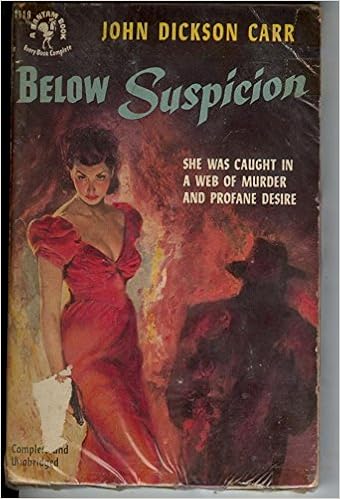
The first time I heard about the Bravo story was in reference to John Dickson Carr's classic Gideon Fell mystery from 1949 Below Suspicion.

Agatha Christie also refers to it in her Ordeal by Innocence

The 1948 Ray Milland film So Evil My Love (based on the novel by Marjorie Bowen) has elements of the story as well. 


Had you heard the story of Charles Bravo? Can you think of any other books or films where antimony is the murder weapon. Do you read John Dickson Carr? You don't hear much about him anymore. 

Here's a List of All the Posts in the Poison Series


Part 28: Mustard Gas

It's HERE! The New Camilla Randall Mystery

It's #6 in the series, but can be read as a stand-alone
At all the Amazons (FREE in KU)


Why does everyone think Camilla has the lost Portuguese crown jewels? And what has turned polite little Buckingham into an attack cat? Can Camilla keep her boyfriend Ronzo safe? Or will the murderous Mack Rattlebag find out Ronzo faked his own death?

It's one surprise after another in this warp-speed comedy-mystery where a too-perfect doctor may or may not be in cahoots with a bunch of homicidal New-Agers. Will Camilla and Ronzo, and the tarot cards, solve the mystery?