Friday, July 22, 2016

Poisoning People for Fun and Profit—Part 14: Mandrake


Mandrake (mandragora officinarum) is a real thing. Not just the product of J.K. Rowling's rich
imagination. But the roots don't actually look like human babies the way they do at Hogwarts. More like small troll-y roots. Sometimes.

But there is an ancient myth that says mandrake roots scream when pulled from the earth—and that anybody who hears the scream will die.

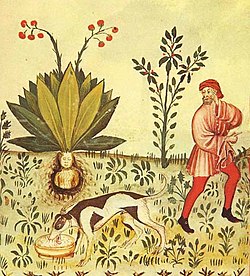
The historian Josephus of Jerusalem (circa 37–100 AD) wrote the following instructions for digging up the mandrake root to avoid the scream-dying-thing curse.

"A furrow must be dug around the root until its lower part is
A Harry Potter Mandrake
exposed, then a dog is tied to it, after which the person tying the dog must get away. The dog then endeavors to follow him, and so easily pulls up the root, but dies suddenly instead of his master. After this, the root can be handled without fear."


Not a great time to be a dog.

The reason the irresponsible pet owners wanted to pull up the plants was probably the purported medicinal properties of the mandrake root, which were considerable. It was used as a sedative, laxative, painkiller, aphrodisiac, fertility aid, and a cure for erectile dysfunction.
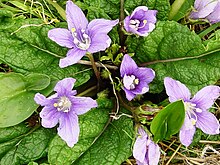

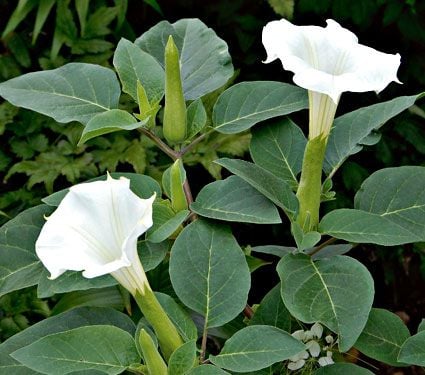
Mandrake flowers
But like all the plants I've been exploring in this series, the root is also deadly in larger doses. Symptoms include blurred vision, pupil dilation, dehydration, dizziness, headache, vomiting, flushing, hyperactivity, and a rapid heart rate.


Like foxglove and Jimson weed, Mediterranean Mandrake, mandragora officianrium, is a member of the nightshade family. Like them, it affects brain chemistry and produces frightening hallucinations.
 
A real mandrake root--not all that human
English Mandrake, Bryonia alba, is a member of the cucumber family, and all its parts are extremely poisonous. It produces a bluish berry, forty of which can kill.


The myths surrounding mandrake are as varied as they are bizarre.
  • Ancient Anglo-Saxons carried the root as a talisman to repel evil
  • In the Bible, it is mentioned as a coveted fertility aid. (Genesis 30: 14-16) 
  • In ancient Persia, couples put the roots under their beds in order to conceive. 
  • Medieval witches smeared an ointment containing a tincture of the root in order to fly. 
  • Joan of Arc was accused of carrying an amulet made of the dried root in order to communicate with Satan. 
  • In medieval Europe it was said that the plants originated near gallows, where they sprang from the semen of hanged men.
Mandrake figures strongly in pagan rituals and many indigenous religions ascribed it mystical powers. It would have been common in medieval households, so it would make a good murder weapon for a medieval mystery.


English Mandrake aka bryonia alba 
Arthur Conan Doyle used mandrake in the Sherlock Holmes story, The Adventure of the Devil's Foot. In it an extract of "Devil's Foot Root" also called mandrake is the cause of two related murders.

Mandrake's rich mythology appears quite often in literature. I remember being puzzled as a young teen by John Donne's poem of impossible goals:

"Go and catch a falling star
Get with child a mandrake root"

And Shakespeare loved the stuff:

"Shrieks like mandrakes' torn out of the earth."...Romeo and Juliet IV.iii

"Would curses kill, as doth the mandrake's groan"...King Henry VI part II III.ii

"Give me to drink mandragora ...That I might sleep out this great gap of time my Antony is away." ...Antony and Cleopatra I.v

Do you have some Mandrake stories to add? There's so much folklore attached to this strange looking plant!

Here's a list of all the posts in the poison series

Part 13: Datura

THE LADY OF THE LAKEWOOD DINER

99c at Amazon for a limited time! 

A comedy that pokes fun at the myth of a Golden Age, making parallels between the Grail legend and the self-mythologizing of the Baby Boomer Generation.

Someone has shot aging bad-girl rocker Morgan Le Fay and threatens to finish the job. Is it fans of her legendary dead rock-god husband, Merlin? Or is the secret buried in her childhood hometown of Avalon, Maine?

Morgan's childhood best friend Dodie, the no-nonsense owner of a dilapidated diner, may be the only one who knows the dark secret that can save Morgan's life. And both women may find that love really is better the second time around.


"A page turning, easily readable, arrestingly honest novel which will keep you laughing at yourself. Who doesn't remember crashing on a mattress at a friend's apartment with the stereo blasting Iron Butterfly and no idea where you'll stay the next night? A cultural masterpiece for the discerning reader."...Kathleen Keena, author of Adolescent Depression, Outside/In


Available in ebook from:

Friday, July 15, 2016

Poisoning People for Fun and Profit—Part 13: Datura


Datura (Datura Stramonium) a.k.a. Jimson Weed or "Moonflower" is another beautiful but deadly plant in the nightshade family. As a murder weapon it's not terribly popular at the moment, but according to Agatha Christie it was once a classic way to do away with unwanted husbands in India and Southeast Asia.


The lovely but deadly Moonflower
The flowers are large and trumpet shaped and come in lovely colors, from pure white to lavender, pink, red, yellow and peach.

Like most poisons, it has medicinal as well as toxic properties. In Ayurvedic and Chinese traditional medicine it is used as a treatment for asthma and inflammation and is used as a painkiller.

Datura also has recreational and spiritual uses (seriously not recommended for the uninitiated.) It has unusual effects on brain chemistry, including highly realistic, often terrifying hallucinations, bizarre, sometimes violent behavior, amnesia, and hyperthermia (which often leads to throwing off of clothing.) Overdoses are common. Death comes from cardiac arrest.

A tell-tale sign of Datura intoxication is highly dilated pupils and the inability to tolerate sunlight.


(Maybe your character isn't really a vampire. He's just been experimenting with Datura.) Because of the pupil thing, if an experiment with Datura doesn't kill you, it can result in blindness—usually temporary.

Datura blossoms are night-blooming, hence the "moonflower" name. The flowers, seeds and roots are the most dangerous. They contain the toxic tropane alkaloids atropine, scopolamine and hyoscyamine, which are categorized as "deliriants."

A deliriant differs from a hallucinogen because it blocks certain neurotransmitters in the brain and creates an all-encompassing delirium. It's impossible for the victim to tell reality from fantasy. 


Various species of Datura are known by other fanciful names like Devil's Weed, Devil's Trumpet, Devil's Snare, Devil's Cucumber (I see a theme here) as well as locoweed, Angel's Trumpet, stinkweed, thorn apple, pricklyburr and my favorite, Hell's Bells. 

But it may best be known by a corruption of "Jamestown weed": "Jimson weed." 

Some species of the plant have a nasty odor, but the blossoms give off a pleasant fragrance when they bloom at night, which seems to embody the essence of the plant, which seems to be equal parts nasty and off-putting. 

The plant is found all over the world, and will grow pretty much everywhere there is dirt and warm weather, but is native to North America and South Asia. It was used as a mystical sacrament by indigenous North American people, and Hindus believe Lord Shiva enjoys smoking it. It is still part of sacred rituals in Nepal and parts of India. 


In Haiti, Datura is sometimes called the "Zombie Cucumber" and in his book, The Serpent and the Rainbow, Canadian ethnobotanist Wade Davis identified Datura as a central ingredient of the concoction voodoo priests use to create zombies.

Datura grows all over my own neighborhood on the central coast of California. The native Chumash tribes here used it in their sacred rituals and believed it allowed them to communicate with the gods. The goddess of Datura was called Momoy, who was pictured as a wild-looking old woman. She brought young tribal members visions of their spirit animals and could foretell the future.


One of the plant's names, "Jamestown weed", comes from the town in
 Virginia, where British soldiers were drugged with it while attempting to suppress Bacon's Rebellion. They spent eleven days appearing to have gone insane, as this contemporary account describes:

"The James-Town Weed (which resembles the Thorny Apple of Peru and I take to be the plant so call'd) is supposed to be one of the greatest coolers in the world. This being an early plant, 
Datura turned the soldiers into "Dutch drolls"
was gather'd very young for a boil'd salad, by some of the soldiers sent thither to quell the rebellion of Bacon (1676); and some of them ate plentifully of it, the effect of which was a very pleasant comedy, for they turned natural fools upon it for several days: one would blow up a feather in the air; another would dart straws at it with much fury; and another, stark naked, was sitting up in a corner like a monkey, grinning and making mows [grimaces] at them; a fourth would fondly kiss and paw his companions, and sneer in their faces with a countenance more antic than any in a Dutch droll." (Yes, that's spelled right. A Dutch droll was rather like our little toy "trolls" of the 1970s—grotesque funny toys will silly smiles.)  


"In this frantic condition they were confined, lest they should, in their folly, destroy themselves – though it was observed that all their actions were full of innocence and good nature. Indeed, they were not very cleanly; for they would have wallowed in their own excrements, if they had not been prevented. A thousand such simple tricks they played, and after eleven days returned themselves again, not remembering anything that had passed." --The History and Present State of Virginia, 1705


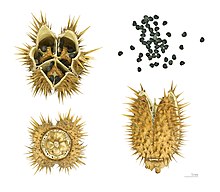
The unfortunate soldiers seem to have eaten the leaves of the plant. If they'd eaten the seeds, they probably would not have recovered. The seeds, which come from small burr-like seed pods, contain about .1 mg. of atropine each. 10 m or less of atropine is lethal to humans.


Sometimes Datura is ingested by accident. In India people sometimes are afflicted by eating honey during the Datura blooming season.

In some parts of Europe and India, Datura is still a popular poison for suicide and murder. In 1996, 120 people in India were poisoned by a cafeteria meal that contained rice tainted with Datura. It was never ruled whether the incident was an accident or murder. 


In 2008, a family in the U.S. poisoned themselves when they ate cooked Datura root and leaves in an "all natural" stew made from ingredients found in their backyard. (Makes Micky-D's take-out look like a better choice than we realized, doesn't it?) 

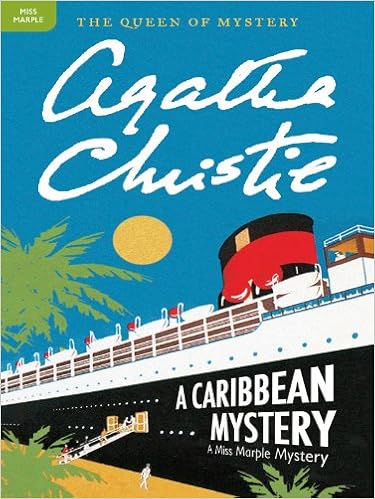
I don't know of many uses of Datura in fiction. As I said above, Miss Marple mentions it in A Caribbean Mystery, but it doesn't play an important part. Here's the quote:

"'They believe what they are told,' said Miss Marple. 'Yes indeed, we're all inclined to do that,' she added. Then she said sharply 'Who told you these stories about India, about the doping of husbands with datura . . . .?'"


The scent of the Datura blossom is favored by perfume makers as an exotic note in dramatic perfumes. Over 50 commercial perfumes contain Datura, including "Datura Noir", a "kaleidoscopic" scent from master perfumer Serge Lutens. 

Many thanks to Janet Boyer for the suggestion of Moonflower for this series! 

What about you? Have you heard any Datura stories? Do you know anybody who has taken it recreationally and lived to tell the tale? Can you think of any mysteries that use Datura as a plot device? 


Part 11: White Snakeroot
Part 12: Strychnine


THE LADY OF THE LAKEWOOD DINER

99c at Amazon for a limited time! 

A comedy that pokes fun at the myth of a Golden Age, making parallels between the Grail legend and the self-mythologizing of the Baby Boomer Generation.

Someone has shot aging bad-girl rocker Morgan Le Fay and threatens to finish the job. Is it fans of her legendary dead rock-god husband, Merlin? Or is the secret buried in her childhood hometown of Avalon, Maine?

Morgan's childhood best friend Dodie, the no-nonsense owner of a dilapidated diner, may be the only one who knows the dark secret that can save Morgan's life. And both women may find that love really is better the second time around.


"A page turning, easily readable, arrestingly honest novel which will keep you laughing at yourself. Who doesn't remember crashing on a mattress at a friend's apartment with the stereo blasting Iron Butterfly and no idea where you'll stay the next night? A cultural masterpiece for the discerning reader."...Kathleen Keena, author of Adolescent Depression, Outside/In

Available in ebook from:

Friday, July 8, 2016

Poisoning People for Fun and Profit—Part 12: Strychnine


Strychnine features in many classic mysteries
Strychnine is one of those poisons that finds its way into a lot of mystery novels. It has been the weapon of choice in classic murder mysteries from Agatha Christie's The Mysterious Affair at Styles to the movie Psycho.

Maybe it's popular in fiction because it works very fast. And it's equally lethal when eaten (although it has a very bitter taste), injected, or inhaled. The symptoms of strychnine poisoning are unmistakable. They include convulsions, a strange arching of the back, and a clenching of the jaw muscles that leave the corpse with a ghoulish grin.

Arthur Conan Doyle described the signs of strychnine poisoning in his Sherlock Holmes mystery The Sign of the Four:


"By the table, in a wooden arm-chair, the master of the house was seated all in a heap, with his head sunk upon his left shoulder, and that ghastly, inscrutable smile upon his face. He was stiff and cold, and had clearly been dead many hours. It seemed to me that not only his features but all his limbs were twisted and turned in the most fantastic fashion."

The poison comes from the Strychnine tree (Strychnos nux-vomica),
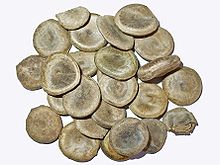
known as "the suicide tree" in its native habitat in India and the tropics of Southeast Asia. The tree has a crooked, short, thick trunk and the fruit has an orange color and is about the size of a large apple with a hard rind. It contains five seeds, which look like flattened disks.
Seeds of the Strychnine fruit

These seeds are the most dangerous part of the tree. They contain alkaloids that can disrupt the heart’s rhythm within hours of consumption. They also cause convulsions and stimulation of nerves in the spine, making it a very nasty way to go. The onset of respiratory failure and brain death can occur in 15 to 30 minutes.

Strychnine seeds were first imported to and marketed in Europe as a poison to kill rodents and small predators as far back as 1640. 

Strychnine was also discovered in the Philippines a century or so later in a shrub called
Strychnos Ignatii
St. Ignatius Bean (Strychnos Ignatii.) The fruit of this shrub contains 25 seeds that have even more of the toxic poison than Strychnos Nux Vomica. The fruits themselves are not toxic and are a favorite snack of monkeys, which is why they are sometimes called "monkey apples."


In Malaysia and Java, people extracted the seeds of the Ignatius fruits and utilized them as dart poison for their blowguns
.

Like most poisons, strychnine has also been used for medicinal purposes. In the Philippines it was believed to be a cure for cholera, and it is still used in homeopathic doses in some places today. 

In the 19th century, people used it as a recreational drug and thought it had performance-enhancing abilities. H. G. Wells discussed its use in his novella The Invisible Man. The title character says: "Strychnine is a grand tonic ... to take the flabbiness out of a man." Um, no thanks. I guess people have always liked to poison themselves with the hope it will give them a competitive edge. 

Strychnine was the poison of choice of Dr. William Palmer, the notorious 19th century murderer Charles Dickens called "the greatest villain that ever stood in the Old Bailey."
Poisoner Dr. William Palmer

Dr. Palmer was hanged for poisoning his friend John Cook with strychnine, and was suspected of feeding it to several other people including his brother and his mother-in-law, as well as four of his children. Palmer made large sums of money from the deaths of his family members after collecting on life insurance, and by defrauding his wealthy mother out of thousands of pounds, all of which he lost through gambling on horses.

Arthur Conan Doyle makes mention of Palmer in the Sherlock Holmes short story, The Adventure of the Speckled Band. And Dorothy L. Sayers mentions him in The Unpleasantness at the Bellona Club. 

Another notorious poisoner—also a physician—Dr. Thomas Neill Cream,"the Lambeth Poisoner" famously fed strychnine to many of his patients. He was also suspected of poisoning his pregnant wife. He left victims in such far-flung cities as Toronto, Chicago and London. Later he poisoned a number of London prostitutes and tried to pin the the murders on W. H. Smith, founder of the UK bookstore chain. But he was convicted of the murders and hanged in 1892. With his last breath, he claimed to be Jack the Ripper, but not many people believed him. Poisoners generally stick to their murder weapon of choice. 

Strychnine is not as readily available today, but it is still legal in some places as a rodent poison that can end up harming pets and other wildlife. It's illegal in the UK, but an unidentified man was
found dead on Saddleworth Moor on Dec 11, 2015. The cause of death was ruled to be strychnine poisoning. 

Can you think of any other mystery writers who use strychnine? What about famous poisoners? 


Here are links to the other posts in this series. 


BOOMER WOMEN: Three Comedies about a Generation that Changed the World


The Lady of the Lakewood Diner, Food of Love and The Gatsby Game, available in one boxed set. 

Friday, July 1, 2016

Poisoning People for Fun and Profit—Part 11: White Snakeroot


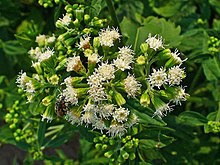
White Snakeroot is a deadly poison
White Snakeroot (Ageratina altissima) is a poisonous plant I'd never heard of before starting this series. Not a lot of deaths from white snakeroot have been reported in the last 100 years or so, but it was a major killer in the American Midwest in the early days of European settlement.

That's because the poison contained in its leaves and flowers (tremetol) can be passed on to humans in the milk and meat of animals who have ingested it. The indigenous Shawnee people knew of its dangers, but the settlers did not.

The plant is native to the Americas and grows all over the Midwestern United States. It grows in woods and brush thickets where it blooms from midsummer into the autumn.

It looks like a harmless wildflower, and the root is used to treat snakebite. (Hence the name.) 


Ageratina altissima
But it is a deadly poison when ingested. It causes tremors, vomiting, thirst, delirium and death. It is toxic to most mammals, especially horses and cattle. Goats are affected too, although their digestive systems fight the toxin more easily so their milk is not affected.

Animals poisoned with White Snakeroot will tremble, show an odd placement of hind feet close together, and have difficulty breathing. But they may not die immediately, so they continue to produce milk.

The fact that the toxin tremetol can pass through cattle into their milk was the cause of many deaths of early settlers in the American Midwest. They called the cause of death "milk sickness" and didn't discover the cause for many decades.

Abraham Lincoln's mother, Nancy Hanks Lincoln, died of milk sickness at the age of 34, when Abe was only 9. 

Dr. Anna Pierce Hobbs Bixby, the original "Medicine Woman," revealed the cause of milk sickness in 1830, having learned it from a Shawnee woman, but her findings were not accepted by the medical establishment until 1928.

BTW, Anna's second husband, Eson Bixby was a notorious outlaw who led a double life. According to local Illinois legend, when Anna discovered who he was, she hid her life savings, which apparently were substantial, in a local cave, for fear he'd try to kill her for her money. And he did just that, but she escaped, only to die a short time later. The treasure is supposedly buried in Rock Creek, Hardin County, Illinois and has never been found. Anna's ghost is said to haunt the area. 

There's a great novel in that story!

There has to be a good story in white snakeroot, too. Maybe a vegan wife on a Midwestern farm kills off her husband by feeding his favorite milk cow some of the toxic herb. Nobody would suspect, since this kind of poisoning is so rare these days.

What about you, readers? Have you ever heard of White Snakeroot poisoning, or "Milk Sickness." How about Dr. Anna Bixby? Isn't that a story that needs to be told? 

Here are links to the other posts in this series. 


Reading about pioneer doctor Anne Bixby reminded me of my own pioneering great, great grandmother, Roxanna Britton. My mom wrote Roxanna's story into a gripping novel that brings that period of American history to life.  

ROXANNA BRITTON: A BIOGRAPHICAL NOVEL 

by Shirley S. Allen  (my mom)
(1921-2013)

"Jane Austen meets Little House on the Prairie"

The true tale of a powerful woman who pioneered the American West: Anne's great-great grandmother,  Roxanna Britton, born in Western Reserve, Ohio in 1833. This gripping novel based on Roxanna's extraordinary life was written by Anne's mother, novelist and scholar, Shirley S. Allen.


Widowed as a young mother, Roxanna breaks through traditional barriers by finding a husband of her own choice, developing her own small business, and in 1865, becoming one of the first married women to own property. We follow her through the hard times of the Civil War to the Great Chicago Fire of 1871 to a homestead in Nebraska to her final home in Elsinore, California. 

"This has become one of my all time favorite stories of "real" people. Ms. Allen's adept use of dialogue and her clear eye for drama and suspense kept me compulsively turning the pages. Her evocation of a bygone era, rich with descriptive details--the historical Chicago fire is one vivid example--is absolutely brilliant. I will never forget Sanny and her family, especially her struggle and her daughters' struggle to become individuals in a male dominated world. 

"But it is family that triumphs in the end; and the need for it to survive resonates most deeply in my mind and heart. An excellent novel that I highly recommend to anyone who enjoys reading true stories about people who not only overcome adversity with grace and integrity but through strength of character also prevail. Well done, Ms. Shirley Allen!"...author Ann Carbine Best

Roxanna Britton is only $2.99 as an ebook at all the Amazons, Kobo, iTunes, Inktera, and Scribd.

Friday, June 24, 2016

Poisoning People for Fun and Profit—Part 10: Castor Beans and Ricin


Castor oil was the subject of horror stories my mother told me about her youth. Apparently it tastes awful and whenever a kid was sick in the early 20th century, they were given castor oil as an all-purpose medicine. Its laxative properties were supposed to cure all ills.  

Castor oil has been used as a medicine for millennia. It was also used for lighting, and is still used today for multiple purposes, including cosmetics, insecticides and fungicides. In Brazil, it's being developed as a biofuel.

Luckily as a small child, my mother didn't know that the castor plant that provides that all-purpose oil also produces one of the most lethal poisons known to man, or she might have spit it out even more often. .

The castor bean (not actually a legume but a seed) not only
Castor "beans"
contains castor oil but it also produces the lethal toxin, ricin (ricinus communis.) Only a handful of the beans can render enough ricin to kill.

When ingested it is highly poisonous, but it's even more toxic when inhaled or injected. The poison acts by inhibiting protein synthesis in ribosomes, causing widespread cell death.

The name comes from the Latin word for tick, ricinus, because he seeds resemble a kind of tick. 

Ricinus Communis

A dose of purified ricin powder the size of a few grains of table salt can kill an adult human. The median lethal dose of ricin from injection or inhaling is about 1.78 milligram for an average adult.

It only takes four to six raw "castor beans" to kill a human, although accidental poisonings are rare.

Symptoms usually begin within two hours, but in some people they can be delayed up to a day or more. These include a burning sensation in mouth and throat, abdominal pain and well, what laxatives do. Within several days there is severe dehydration, a drop in blood pressure and a decrease in urine. Unless they are treated, victims die in about four days. But in most cases there can be a full recovery. 

It doesn't work fast, but it is hard to detect, which makes it a favorite with murderers and terrorists. 

Castor is also called "African Wonder Tree"
The plant (sometimes called "African Wonder Tree") is quite pretty and is often used for ornamental use. But simply being around the plant can be dangerous for some people, since it's one of the most powerful allergens around. It's a strong trigger for asthma because it produces abundant amounts of very light pollen, which easily become airborne and can be inhaled into the lungs, triggering allergic reactions.

The sap of the plant causes skin rashes. Individuals who are allergic to the plant can also develop rashes from merely touching the leaves, flowers, or seeds.

But it's an important cash crop in many parts of the world, especially India. And because the plants are hardy, they are used in decorative plantings in parks all over the world.


Lots of castor plants in Griffith Park 
Griffith Park in Los Angeles has abundant castor plants, and they have naturalized and now grow wild all over California. 

Californians with murder on their minds have an abundance of poisonous plants to choose from, with the oleander planted all over our highway median strips and hemlock growing wild in drying creek beds.

The biggest danger from the beans is to cats and dogs, so if you suspect your pet has been around the plant and displays symptoms, get to the vet asap. More on what to do from the Pet Poison Hotline. 
 

Ricin, when isolated, is considered a weapon of mass destruction. And it's often used for political murders. 
Georgi Markov

In 1978, the Bulgarian dissident Georgi Markov was killed by a KGB agent using a weapon built into an umbrella. He jabbed him in the leg with the weapon in public on the Waterloo bridge. The weapon embedded a small pellet containing ricin into Markov's leg and he died four days later. 

It seems to be a special favorite with the anti-government terrorists who like to send toxins to government officials through the Postal System. 

Homegrown terrorists in the US and Britain seem to have a fascination with it. In 2009, a UK father and son, Ian and Nicky Davison, were arrested for possessing ricin as a part of a far-right terrorism plot. In April 2013, a letter addressed to President Obama tested positive for ricin, and in a bizarre incident that same year, actress Shannon Richardson pleaded guilty to sending ricin laced letters to President Obama and Mayor Michael Bloomberg. She confessed, but claimed her husband made her do it.
Bryan Cranston as Walter White


It sometimes figures in domestic murders as well. In January 2006, a man named Chetanand Sewraz in Richmond, Virginia was arrested for possessing mashed castor beans, which he allegedly intended to use to kill his estranged wife. 

In 2014, a teenager sent a scratch-and-sniff birthday card laced with ricin to a man dating his ex-girlfriend. He bragged about the toxic card to a coworker at Target, who notified authorities.


And fans of Breaking Bad know that Walter White liked to use it to eliminate his competition in the drug trade. A cigarette provides a handy delivery device.


What about you? Do you have any ricin stories? Can you think of any books that use ricin as a murder weapon? 


Here are links to the other posts in this series. 


GHOSTWRITERS IN THE SKY: CAMILLA MYSTERY #1

After her celebrity ex-husband’s ironic joke about her "kinky sex habits" is misquoted in a tabloid, New York etiquette columnist Camilla Randall's life unravels in bad late night TV jokes.

Nearly broke and down to her last Hermes scarf, she accepts an invitation to a Z-list Writers Conference in the wine-and-cowboy town of Santa Ynez, California, where, unfortunately, a cross-dressing dominatrix named Marva plies her trade by impersonating Camilla.

When a ghostwriter's plot to blackmail celebrities with faked evidence leads to murder, Camilla must team up with Marva to stop the killer from striking again.

Ghostwriters in the Sky is only 99c in e-book at all the Amazons iTunes, GooglePlay  Kobo, Inktera, Scribd and NOOK.

It is available in paper at Amazon and Barnes and Noble.

It is FREE at iTunes, Inktera, and Kobo

"Ghost Writers is set in a writers' conference in Santa Ynez Valley, where I've lived for twenty years.... This book is hysterically funny AND accurately depicts the Valley. Anne Allen gets it right, down to the dollar bills stuck on the ceiling of the Maverick Saloon. It was so fun to read as she called out one Valley landmark after another. Allen got the local denizens right, too, the crazy characters that roam our streets"...Sandy Nathan, award-winning author of The Bloodsong Series


Friday, June 17, 2016

Poisoning People for Fun and Profit, Part 9—Botulism


Botulism, the fatal condition caused by Botulinum toxin a.k.a. Botox™ , is something I was taught to fear when very young. Botulinum is a neurotoxic protein produced by the bacterium Clostridium botulinum.

Badly Canned Green Beans Can Cause Botulism
It is the one of the most lethal toxins on earth, according to the Journal of American Medicine. It kills by paralyzing the muscles, including heart and lungs.

It's that ability to paralyze that has led to its current popularity as a deterrent to wrinkling in aging skin. But it must be administered by a professional, or the protein can go into the bloodstream and cause death.

When I was a kid growing up in rural Maine, botulism caused by tainted canned goods was a real threat. The bacterium grows in an anaerobic (oxygen-free) low-acid environment.

Everybody in our town had a garden and most of our moms "put up" the summer's bounty by "canning" it in Mason jars which were kept in the cellar during the long Maine winters. (Often along with big coffin-sized freezers full of venison provided during hunting season. But no, my patrician Latin-professor father did not hunt.)

My mom did a lot of canning, but she never canned green
Botulinum Toxin
beans. She'd had the fear of botulism instilled in her too.

I remember hearing a story about a whole family that was wiped out after eating three-bean salad at a family reunion picnic. Probably an urban (or in this case rural) myth, but it stayed with me.

To this day I can't stand canned green beans. And I have no desire to have the lethal toxin injected into my face to erase my wrinkles.

Hey, I've worked hard for these wrinkles. I display them proudly. 


But green beans are not the only source of the toxin. It occurs naturally in soil and can grow almost anywhere it's in an oxygen-deprived environment.


It was first isolated in pork products in the early 19th century and its name comes from the Latin word for sausage, botulus. 

Does 3-Bean Salad Kill?
It can kill whether it's ingested, injected, or inhaled. Drug addicts sometimes unknowingly inject themselves with it in tainted needles and it can be hard to diagnose.

The symptoms are double vision, slurred speech, muscle weakness, and droopy eyelids, followed by vomiting and difficulty swallowing. Sometimes the symptoms can be mistaken for intoxication.

In the late 19th and early 20th century, the fatality rate from botulism was 60% or more, but it has been reduced to 15% because of modern treatments. But patients need to be diagnosed soon after poisoning and they can take several weeks to recover. 


Just today, I read of a case of botulism poisoning in a federal prison in Mississippi. 20 inmates have been hospitalized after drinking homemade moonshine. They are expected to live because of getting immediate treatment, but they are seriously ill.

In the Benedict Cumberbatch Sherlock Holmes series episode The Great Game, botulism features heavily.


(The series combines a number of Conan Doyle's original plots in each episode.) In The Great Game, a schoolboy is poisoned with botulinum in his eczema cream, and a housekeeper is murdered by her brother's lover, who increases the woman's Botox dose.

Botox would make a handy weapon in contemporary fiction, since it is so popular for cosmetic use. It's also used in treatment of an increasing number of medical issues, including bladder control, muscle spasms, excessive sweating, migraines, and bruxism (teeth clenching.)


Author Garry Rodgers, who's a former coroner, has written about what an awful death botulism causes. Here's his full story of the "Red Pepper Paste Man". It also might make you think twice about buying food from China at the Dollar Store.

Can you think of any other mysteries where botulinum is featured? Are you thinking up any plots where it might be used? 


Here are links to the other posts in this series. 


SHERWOOD, LTD: Camilla Mystery #2


Suddenly-homeless American manners expert Camilla Randall becomes a 21st century Maid Marian—living rough near the real Sherwood Forest with a band of outlaw English erotica publishers—led by a charming, self-styled Robin Hood who unfortunately may intend to kill her. 

When Camilla is invited to publish a book of her columns with UK publisher Peter Sherwood, she lands in a gritty criminal world—far from the Merrie Olde England she envisions. 


The staff are ex-cons and the erotica is kinky. Hungry and penniless, she camps in a Wendy House built from pallets of porn while battling an epic flood, a mendacious American Renfaire wench, and the mysterious killer who may be Peter himself.

Sherwood, Ltd. is only $2.99 in ebook from all the Amazons, iTunes, GooglePlay Scribd, Inktera, Kobo, Nook, and Smashwords. 
And it's  $11.99 in paper from Amazon and Barnes and Noble


Sample Reviews:

"A wily tale of murder, deceit, and intrigue that can stand with the best of them. Her characters are all too real and her dialogue took me from laughter to chills" David Keith on Smashwords

"Smartly written and nearly impossible to put down, I found myself counting the hours until I could leave work and get back to reading! Well done!" T.L. Ingham on Smashwords

"An intriguing and fast paced novel that demands you read on to the next page and beyond. The characters are well constructed and believable and I enjoyed the difference between the USA and UK people. The plight of our heroine is complex and well -managed and in the beginning I was striving for her to find some genuine help and support. The flip over to the UK added more spice! Highly recommended."—David L. Atkinson, author of The 51st State.