Showing posts with label Ghostwriters in the Sky. Show all posts

Friday, January 24, 2020

You Lost me at Hello: Ask the Manners Doctor


The Problem with the Naked "Hello"


The Manners Doctor, aka Camilla Randall, author of "Good Manners for Bad Times" and "Rx for the Modern Wedding", has agreed to visit this blog once a month to answer some of our questions about online etiquette.


Q. Dear Manners Doctor:

I never know how to respond when some man friends me on Facebook or Instagram and immediately sends a direct message that simply says “Hello”—nothing else.

I used to just ignore these naked “hellos” because they seem creepy, but recently, a man on Instagram called me rude for not responding.

So the next time I got a hello on FB, I asked the man to interact on my page before he sent me a direct message, which I like to reserve for friends and family. He got so mad he sent me eggplant emojis all night long, interspersed with messages like “Goodnight Sweetie” and “Bye-bye Baby.”

I finally got up and blocked him at 4 AM, but when I told my FB friends about it, one woman said I should unblock because it wasn’t his fault. He probably didn’t know how to use his phone and did it all accidentally.

Can the Manners Doctor tell me what I’m doing wrong? Do I owe it to strange men to interact with them on social media?

Divorced but Not Lonely

A. Dear Not Lonely:

No man (or woman) has the right to sexually harass you, online or off.  Facebook and Instagram are not dating sites. The Manners Doctor is quite sure that anyone who is unaware of that fact has either been in a coma for the last twenty years or recently arrived from a galaxy far, far away.

And she doubts that comatose space aliens would know the off-color meaning of the eggplant emoji.

What you call a “naked hello” is the calling card of the scammer.  It is intrinsically manipulative. The speaker offers nothing, but demands something of the recipient. Con artists always count on the good manners of their marks. 

Sometimes what seems “rude” in normal circumstances is simple self-preservation when dealing with a con artists.   

You were doing exactly the right thing. The person who called you rude was in the wrong. If anybody sends you a “naked hello” (The Manners Doctor is going to appropriate your excellent phrase) do not respond. Then block the sender.

Very Truly Yours, 

The Manners Doctor

Q. Dear Manners Doctor:

A friend I hadn’t heard from in several years—I’ll call her Sheila—recently sent me a Direct Message on Facebook that simply said “hello.” I was thrilled. We hadn’t parted on good terms, but I figured she wanted to let bygones be bygones and make up.

Because the situation was delicate, instead of sending a reply message, I phoned her.

I was devastated when her husband answered and said Sheila died two months ago. He said I was horribly rude to intrude on his grief when I hadn’t even bothered to show up at the funeral.

Doctor, how can I be called “rude” when I didn’t know anything about the funeral? There was nothing about it on her Facebook page, which hadn’t been updated for nearly five years. 

And I still don’t know why I got that “hello” message from Sheila from beyond the grave.

Getting Messages from the Other Side

A. Dear Getting Messages:

The Manners Doctor makes it a point never to criticize anyone’s belief system, but she is quite sure that what you experienced was not a message from the “Other Side.”

One of the most common scams in social media is a “hack” that doesn’t require hacker skills. The scammer simply goes to a Facebook page (they prefer neglected ones like Sheila’s) and skims the person’s friends list. Then they send messages (usually an unadorned “hello”) hoping to get a reply. 

Once they’ve convinced the mark that they’re really the friend they’re impersonating, they spin a tale of woe and hit the mark up for a "loan".

This must work on some victims, because these scams are proliferating.

The Manners Doctor advises that no one respond to a naked “hello,” even when it appears to be from a friend.

Very Truly Yours, 

The Manners Doctor.

Do you have any questions for the Manners Doctor? How do you feel about the "naked hello"?


Book of the Month
Start at the Beginning of the Manners Doctor Saga--Only 99c!

GHOSTWRITERS IN THE SKY:  Camilla Randall Mystery #1 

After her celebrity ex-husband’s ironic joke about her “kinky sex habits” is misquoted in a tabloid, New York etiquette columnist Camilla Randall’s life unravels in bad late night TV jokes.

Nearly broke and down to her last Hermes scarf, she accepts an invitation to a Z-list Writers’ Conference in the wine-and-cowboy town of Santa Ynez, California, where, unfortunately, a cross-dressing dominatrix named Marva plies her trade by impersonating Camilla.

When a ghostwriter’s plot to blackmail celebrities with faked evidence leads to murder, Camilla must team up with Marva to stop the killer from striking again.

Ghostwriters in the Sky is available in e-book at all the Amazons  GooglePlay  KoboScribd and NOOK.

It is available in paper at Amazon & Barnes and Noble 


Friday, October 26, 2018

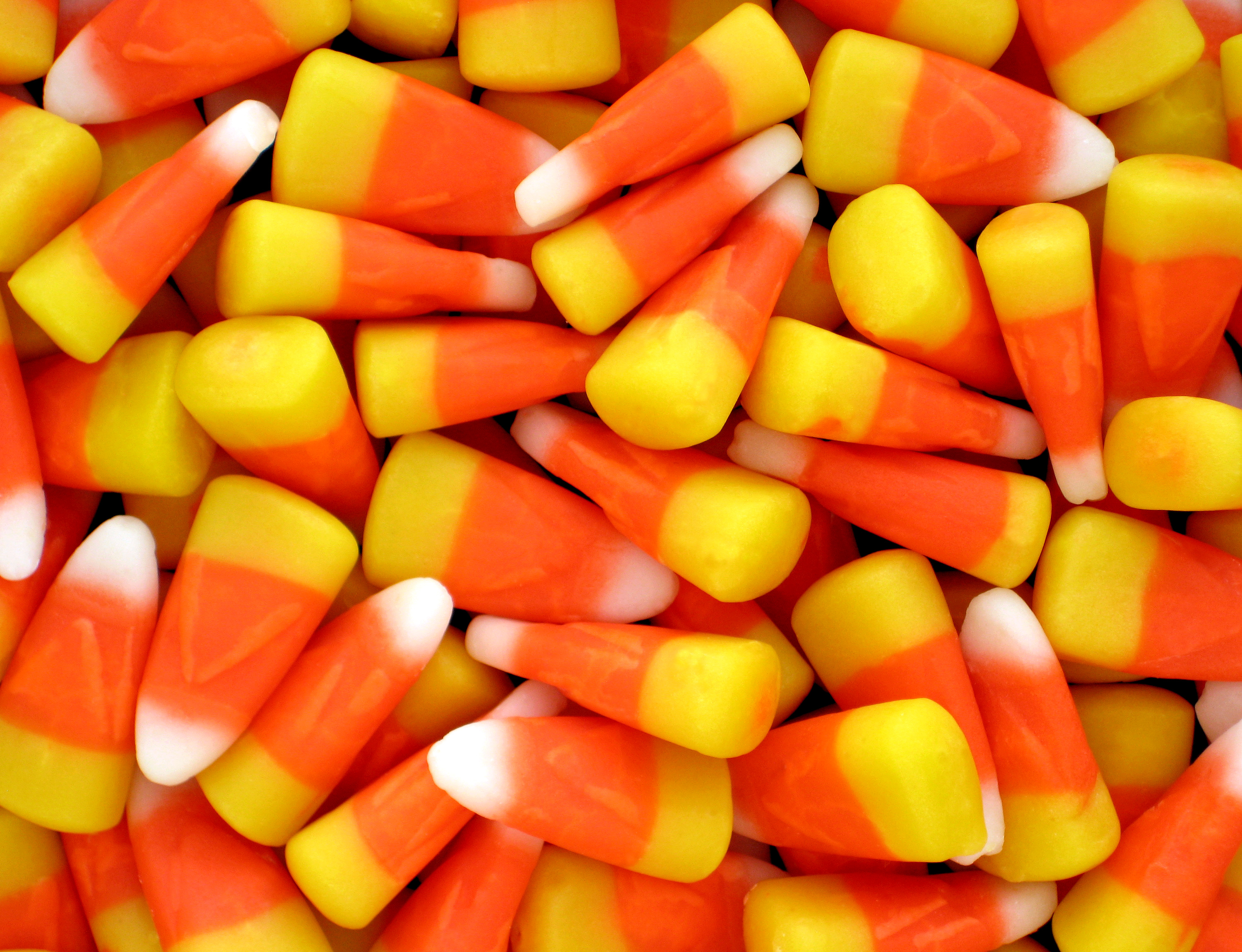
Dear Abby and The Myth of Poisoned Halloween Candy


Lots of folklore feeds our fears of apples. Snow White got poisoned with one. And Greek legend blames the entire Trojan war on an apple: the "Golden Apple of Discord" thrown at three goddesses by Eris, the goddess of discord. 


But apples have got a bad rap. And it's unlikely you'll ever find one hiding a razor blade or a sewing needle, in spite of all the horror stories your mom told you when you went out trick-or-treating. 

There are lots of things to be afraid of on Halloween. Your kid getting hit by a car while dressed in black as a ninja, a witch, or Severus Snape. Or somebody kidnapping your black kitty and doing him harm. Or somebody eating too much candy and throwing up on the newly shampooed carpet. 

But poisoned candy isn't one of them.  

All of that is bogus fear-mongering. A lot of the fear was mongered by the advice columnist siblings Dear Abby and Ann Landers. 

Dear Abby and Ann Landers Spread the Panic


According to Smithsonian magazine, on October 31, 1983, advice columnist "Dear Abby" (the late Abigail Van Buren) published a column called "A Night of Treats, not Tricks." In that column, she warned her readers that, on Halloween, "somebody’s child will become violently ill or die after eating poisoned candy or an apple containing a razor blade."

No child has been poisoned by a stranger's Halloween candy

Twelve years later, Dear Abby's sister, advice columnist Ann Landers, also wrote a Halloween article in which she warned that "Twisted minds make Halloween a dangerous time," echoing that concern. She said, "In recent years, there have been reports of people with twisted minds putting razor blades and poison in taffy apples and Halloween candy." She even stated flatly: "It is no longer safe to let your child eat treats that come from strangers." This made life difficult for candy companies all over the U.S.

And it turns out these "reports" were entirely bogus. 

Every so often something happens that stirs up the stories again. 

Abby may be forgiven for falling for the drama in 1983. The 1982 Tylenol poisonings that killed seven people were fresh in everybody's minds. So the idea of a crazed madman who wanted to kill random strangers was not far-fetched. It was easy to merge them with the myths that were already out there about crazed child murderers handing out tainted "treats" to the trick-or-treaters.

Some Poisonings That Didn't Happen


Here are some of the incidents that keep the myths alive, as reported by Snopes. 

In 1970, a boy went into a coma from a heroin overdose and heroin was found sprinkled on his Halloween candy.  It turned out he had got into his uncle's heroin stash and his family had sprinkled the heroin on the candy after the fact to protect the uncle.

In 1982 the police in Detroit announced a boy had been poisoned by cyanide in Halloween candy. But medical tests were inconclusive and later FDA tests of the candy turned up no contamination whatsoever. 

In 1990, a 7-year-old Santa Monica girl died of congenital heart failure while trick-or-treating. The police feared a mass random poisoning sent out an alert. Unfortunately the later retraction didn't travel anywhere near as far or wide as the initial false alarm. 


The Halloween Poisoning Sleuth, Dr. Joel Best


For decades, Joel Best a sociologist at the University of Delaware conducted a study of these stories. His findings: He never found a confirmed case of a stranger murdering a child with poisoned Halloween candy.

He did find one case of a father who murdered his own son with poisoned Halloween candy.

This was awful, but it was a one-off act of targeted murder.

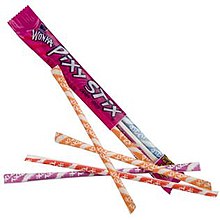
In 1974, a sociopath named Ronald Clark O'Bryan took out a large life insurance policy on his 8 year old son Timothy a few days before Halloween. On Halloween, he put some cyanide into Timmy's Pixy Stix and got him to eat it before going to bed. He also poisoned some Pixy Stix he gave out to local trick or treaters, so it would look as if his son's murder was part of a random attack on local children.

Luckily none of the other children ate the candy, partly because of quick reaction from local police, and partly because Mr. Clark had resealed the Pixy Stix with staples that were too hard for a child to open.

Mr. Clark was executed in 1984, and maybe stories of his horrible deeds also sparked the rumors that prompted Dear Abby's misguided column.

Dr. Joel Best has tried hard over the years to destroy the poisoned Halloween candy myth, but he hasn't had much luck. "It's the old problem of trying to prove a negative," he says.

He says his favorite story is the one about the kid who brought a half-eaten candy bar to his parents and said, "I think there's ant poison on this." They had it checked and, sure enough, there was ant poison on it—significantly, on the end he hadn't bitten.

It later turned out the kid had put the ant poison on the candy himself. 

What about those Stories of Razor Blades and Pins in Apples?


These seem to be more of the same.


According to author Jack Santino, who's written a number of books on the history and folklore behind Halloween, "pins and needles" (and razor blade) rumors began to supplant "poisoned candy" rumors in the mid-1960s, and nearly the reports turned out to be hoaxes: 

He said, "more than 75 percent of reported cases involved no injury, and detailed followups…concluded that virtually all the reports were hoaxes concocted by the children or parents. Thus this legend type seems to have grown out of a tradition of ostensive hoaxes relying on an understood oral tradition, rather than on any core of authenticated incidents."

So poisoned candy is very much the stuff of fiction, but it has only the most tenuous attachment to fact. As writers, we'd do better to to write about poisoned chocolate Easter bunnies or Christmas candy canes and at least be creative about it.


What about you, readers? Did you believe these stories when you were a kid? Did your parents? Did your parents ban trick or treating because they were so afraid of mad poisoners? 


The first book in the Camilla comedy-mystery series is  99c


and all the Amazons internationally

Also available at Google Play,


GHOSTWRITERS IN THE SKY 


It's available in paper at Amazon & Barnes and Noble 

A wild comic romp set at writers’ conference in the wine-and-cowboy town of Santa Ynez, California. When a ghostwriter's plot to blackmail celebrities with faked evidence leads to murder, Camilla must team up with a crossdressing dominatrix to stop the killer—who may be a ghost—from striking again. Meanwhile, a hot LA cop named Maverick Jesus Zukowski just may steal her heart.

It's also available in Spanish on Amazon

Friday, July 27, 2018

Sleeping Pills—Poisoning People for Fun and Profit #36.


Sleeping pills used to be a reliable way of putting nasty Great-Aunt Augusta out of your misery if you were a financially embarrassed heir who was afraid the old dear was about to change her will and leave all her millions to her pet hedgehog. 

"Flaming June" by Fredrick Lord Leighton
If she had a prescription for them, it would be tough for the police to tell a murder from an accidental overdose, so they came in very handy.

But sedatives have become much safer in recent years. The dangerous barbiturates of the late 19th and early 20th century have largely been supplanted by benzodiazepines. (The first benzodiazepine, Librium, was invented in 1955.)

In the 21st century the newer “Z-drugs” are usually the sleeping pills of choice.

Death from benzodiazepine or Z-drug overdoses alone isn’t common, but when they’re combined with alcohol, antidepressants, or opioids, there’s a much higher risk of overdose. And the elderly and people with chronic illnesses are especially vulnerable to lethal overdoses.


So if Great-Aunt Augusta is suffering from a chronic ailment, that Ambien or Xanax she takes might work just as well as the old-fashioned phenobarbital or Seconal if you put a high dose in her evening snack. Especially if she enjoys a bit of a tipple before bed.

Z-Drugs


Zolpidem (Ambien), Eszopiclone (Lunesta) and, and zaleplon (Sonata) are non-benzodiazepine drugs used in the treatment of insomnia and commonly referred to as the “Z-drugs.” 

Z drugs are typically used to assist people who have a hard time falling asleep, rather than ones who wake frequently. They act on the central nervous system (CNS) and reduce heart rate (the number of times the heart beats per minute), and increase shallow breathing both of which are controlled by the CNS. 

They induce sleep but don’t treat anxiety. And they’re very short lived. They leave the body within an hour or two.

Poisoning somebody with Z-drugs would take rather a lot of pills. One Ambien tablet is usually 10 milligrams. 600 mg could kill somebody in fragile health, but 2,000 mg would be necessary to make sure the job was done.

An overdose of Lunesta can happen at approximately at about 270 mg. and it takes about 200mg. of Sonata. But people have been known to survive that dosage if alcohol isn’t involved.

But it’s good to note that any number of sleeping pills over the recommended dose can kill under the right circumstances. They shut down the respiratory center and people simply stop breathing.


Benzodiazepines


Benzodiazepines (Librium, Ativan, Valium, Xanax) are named because of their actions on the benzodiazepine receptors located in the brain. They act in pretty much the same way as the Z-drugs, but they're less likely to affect other systems in the body.


They're also much more effective in treating anxiety.

Unfortunately they can be drugs of abuse, because it’s easy to build a tolerance for them. The FDA reported that in 2013, benzodiazepines were involved in 31% of the estimated 22,767 deaths from prescription drug overdose in the United States, usually caused by a combination of benzodiazepines with opioids.

Following an overdose of a benzodiazepine, symptoms kick in within 4 hours. Victims tend to appear drunk, with impaired balance, slurred speech, and uncontrolled muscle function. They also can show “paradoxical” symptoms like anxiety and aggression. Sometimes they’ll also suffer nausea and vomiting.

Barbiturates


The old fashioned barbiturates like Nembutal, phenobarbital, and Seconal are still in use, although they're no longer prescribed as sedatives.

They're used for general anesthesia, epilepsy, acute migraines, and cluster headaches. Veterinarians use them for euthanasia of small animals.

And they’re still one of the most abused drugs around. In 2007, the Lancet listed them third in terms of physical harm, fourth in terms of social harm and fifth in dependence.

They are highly addictive and the patient can become addicted within a month. They are a commonly sought-after street drug, since they give a feeling of well-being.

During the first part of the 20th century – especially during the 1930s and 1940s – barbiturates were popular prescription “wonder” drugs, prescribed for everything from autism to epilepsy. It’s estimated that in 1939 over 2.2 million doses were sold in the US. By 1945, that number had nearly tripled. 

"Sleeping Beauty" by Victor Gabriel Gilbert

But the number of barbiturate prescriptions have decreased significantly since the 1970s. 

Death due to acute barbiturate poisoning typically occurs because of a stoppage in breathing. Like other CNS depressants, barbiturates suppress respiration. This is especially true – and especially hazardous – when they are taken in combination with other depressants like alcohol or opioids.

Symptoms of an overdose again mimic drunkenness: staggering, difficulty in thinking, slurred speech, faulty judgement, and drowsiness.

A lot of celebrities of the era died of barbiturate poisoning, either accidental or self-inflicted. Judy Garland, Marilyn Monroe, and Jimi Hendrix all died of barbiturate overdoses. So did columnist Dorothy Kilgallen—although a number of conspiracy theorists of the Nixon era suspected murder in her case.

Antidote


Flumazenil (Romazicon) is a competitive benzodiazepine "receptor antagonist" that can be used as an antidote for both Z-drug and benzodiazepine overdose. But the drug is controversial since it can cause a number of dangerous side effects. 

Here's a list of all the poisons in this series

BOOK OF THE MONTH

ONLY 99C!!!

GHOSTWRITERS IN THE SKY:  Camilla Mystery #1 

After her celebrity ex-husband’s ironic joke about her “kinky sex habits” is misquoted in a tabloid, New York etiquette columnist Camilla Randall’s life unravels in bad late night TV jokes.

Nearly broke and down to her last Hermes scarf, she accepts an invitation to a Z-list Writers’ Conference in the wine-and-cowboy town of Santa Ynez, California, where, unfortunately, a cross-dressing dominatrix named Marva plies her trade by impersonating Camilla.

When a ghostwriter’s plot to blackmail celebrities with faked evidence leads to murder, Camilla must team up with Marva to stop the killer from striking again.

Ghostwriters in the Sky is available in e-book at all the Amazons iTunesGooglePlay  KoboInkteraScribd and NOOK.

It is available in paper at Amazon & Barnes and Noble 


Friday, May 26, 2017

Poisoning People for Fun and Profit: Can Bleach and Ammonia Kill?


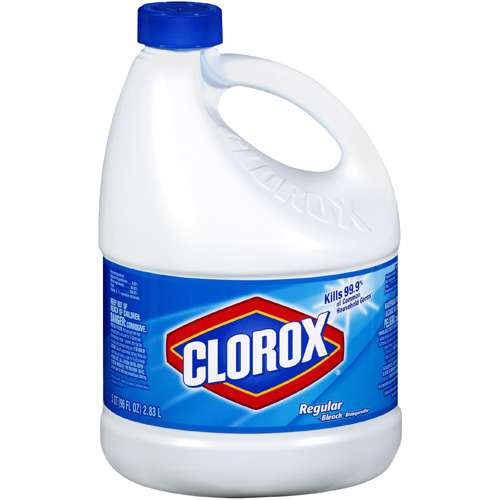
I don't know if it was my own mother or somebody else's who first warned me of the dangers of mixing bleach and ammonia. But like most kids I knew, I was told when I was very young that the mixture was lethal and would produce "mustard gas."

In fact, one of my first attempts at writing a mystery, when I was in about third grade, involved a mysterious corpse found in the girl's bathroom of an elementary school, and the deceased had been done in by mustard gas made from bleach and ammonia.

I thought I was terribly clever, since those were cleaning supplies that could be found in any janitor's closet in those days, so anybody could be a suspect.

I never could decide on a murderer or a motive, so I never finished the book, which I started writing with a schoolmate who lost interest in it before I did.

But it's just as well, because it seems that I (as well as our moms) got it wrong.

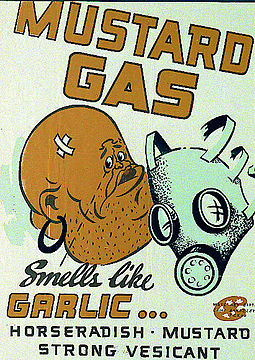
Bleach and ammonia do form a toxic gas, chloramine, but it's not "mustard gas" otherwise known as "Sulfur Mustard" the horrific chemical weapon used by the Germans in World War I.

Mustard gas actually smells like garlic and it's a "vesicant," which means it causes corrosive burns on the skin.

Chloramine gas, which is what happens when you combine bleach and ammonia, doesn't burn the skin, but it can cause respiratory damage and throat burns.


However, it's not likely to kill you unless you're cleaning in a very small unventilated space.

But…if there's more ammonia than bleach, the explosive hydrazine might form. Hydrazine was used as rocket fuel in WWII. Explosions do kill people, so in that way the combo can be lethal.

But it's certainly not a surefire way to kill somebody. So I wouldn't recommend it to any mystery novel villains.

In researching this article, I ran into an awful forum where teens were bantering about how they planned to kill themselves. One young man was convinced that mixing bleach and ammonia and inhaling the fumes would take him off on a fairly painless trip to heaven. (I'm not going to link to it because it don't want to give those idiots the clicks.)

Luckily ammonia is so stinky it would probably put him off before he got very far. But all he'd do was burn his throat and maybe permanently damage his lungs. Very painful, but unlikely to be deadly.
Window cleaners usually contain ammonia

Mixing bleach and Drano is apparently more likely to kill, although again, the conditions have to be exactly right.But it's definitely not a good idea to pour bleach in the toilet after you've poured in Drano to unclog it.

In general, it's good to remember that mixing your household cleaners isn't wise. However, if you're a mystery author, forget the homemade mustard gas as a murder weapon. A nice dose of Warfarin or a Hemlock salad would work better. 

What about you? Were you told that bleach and ammonia make mustard gas? Where do you suppose the myth originated? Anybody know?  


Here's a List of All the Posts in the Poison Series


Part 27: Warfarin

 ONLY 99C!!!

GHOSTWRITERS IN THE SKY:  Camilla Mystery #1 

After her celebrity ex-husband’s ironic joke about her “kinky sex habits” is misquoted in a tabloid, New York etiquette columnist Camilla Randall’s life unravels in bad late night TV jokes.

Nearly broke and down to her last Hermes scarf, she accepts an invitation to a Z-list Writers’ Conference in the wine-and-cowboy town of Santa Ynez, California, where, unfortunately, a cross-dressing dominatrix named Marva plies her trade by impersonating Camilla.

When a ghostwriter’s plot to blackmail celebrities with faked evidence leads to murder, Camilla must team up with Marva to stop the killer from striking again.

Ghostwriters in the Sky is available in e-book at all the Amazons iTunesGooglePlay  KoboInkteraScribd and NOOK.

It is available in paper at Amazon  Barnes and Noble 

and it's now available at Walmart! 
Paperback is only $10.19 at Walmart

The ebook is FREE at iTunesInktera, and Kobo!

Friday, October 28, 2016

Poisoning People for Fun and Profit: Part 22—The Myth of Halloween Candy Poisonings


There are lots of things to be afraid of on Halloween. Your kid getting hit by a car while dressed in black as a ninja, a witch, or Severus Snape. Or somebody kidnapping your black kitty and doing him harm. Or somebody eating too much candy and throwing up on the newly shampooed carpet. 


But poisoned candy isn't one of them.  

All of that is completely bogus fearmongering. A lot of the fear was mongered by the advice columnist siblings Dear Abby and Ann Landers. 

Dear Abby and Ann Landers Spread the Panic


According to Smithsonian magazine, on October 31, 1983, advice columnist "Dear Abby" (the late Abigail Van Buren) published a column called "A Night of Treats, not Tricks." In that column, she warned her readers that, on Halloween, "somebody’s child will become violently ill or die after eating poisoned candy or an apple containing a razor blade."

No child has been poisoned by a stranger's Halloween candy

Twelve years later, Dear Abby's sister, advice columnist Ann Landers, also wrote a Halloween article in which she warned that "Twisted minds make Halloween a dangerous time," echoing that concern. She said, "In recent years, there have been reports of people with twisted minds putting razor blades and poison in taffy apples and Halloween candy." She even stated flatly: "It is no longer safe to let your child eat treats that come from strangers." Thus making life difficult for candy companies all over the U.S.

And it turns out these "reports" were entirely bogus. 

And every so often something happens that stirs up the stories again. 

Abby may be forgiven for falling for the drama in 1983. The 1982 Tylenol poisonings that killed seven people were fresh in everybody's minds. So the idea of a crazed madman who wanted to kill random strangers was not far-fetched. It was easy to merge them with the myths that were already out there about crazed child murderers handing out tainted "treats" to the trick-or treaters.

Some Poisonings That Weren't


Here are some of the incidents that keep the myths alive, as reported by Snopes. 

In 1970, a boy went into a coma from a heroin overdose and heroin was found sprinkled on his Halloween candy.  It turned out he had got into his uncle's heroin stash and his family had sprinkled the heroin on the candy after the overdose.


In 1982 the police in Detroit announced a boy had been poisoned by cyanide in Halloween candy. But medical tests were inconclusive and later FDA tests of the candy turned up no contamination whatsoever. 

In 1990, a 7-year-old Santa Monica girl died of congenital heart failure while trick-or-treating. The police feared a mass random poisoning sent out an alert. Unfortunately the later retraction didn't travel anywhere near as far or wide as the initial false alarm. 


The Halloween Poisoning Sleuth, Dr. Joel Best


For decades, Joel Best a sociologist at the University of Delaware conducted a study of these stories. His findings: He never found a confirmed case of a stranger murdering a child with poisoned Halloween candy.

He did find one case of a father who murdered his own son with poisoned Halloween candy.

This was awful, but it was a one-off act of targeted murder.

In 1974, a sociopath named Ronald Clark O'Bryan took out a large life insurance policy on his 8 year old son Timothy a few days before Halloween. On Halloween, he put some cyanide into Timmy's Pixy Stix and got him to eat it before going to bed. He also poisoned some Pixy Stix he gave out to local trick or treaters, so it would look as if his son's murder was part of a random attack on local children.

Luckily none of the other children ate the candy, partly because of quick reaction from local police, and partly because Mr. Clark had resealed the Pixy Stix with staples that were too hard for a child to open.

Mr. Clark was executed in 1984, and maybe stories of his horrible deeds also sparked the rumors that prompted Dear Abby's misguided column.

Dr. Joel Best has tried hard over the years to destroy the poisoned Halloween candy myth, but he hasn't had much luck. "It's the old problem of trying to prove a negative," he says.


He says his favorite story is the one about the kid who brought a half-eaten candy bar to his parents and said, "I think there's ant poison on this." They had it checked and, sure enough, there was ant poison on it—significantly, on the end he hadn't bitten.

It later turned out the kid had put the ant poison on the candy himself. 

What about the Stories of Razor Blades and Pins in Apples?


These seem to be more of the same.

The razor blades were put there by the kids themselves. Nobody got hurt.

According to author Jack Santino, who's written a number of books on the history and folklore behind Halloween, "pins and needles" (and razor blade) rumors began to supplant "poisoned candy" rumors in the mid-1960s, and nearly the reports turned out to be hoaxes: 

He said, "more than 75 percent of reported cases involved no injury, and detailed followups…concluded that virtually all the reports were hoaxes concocted by the children or parents. Thus this legend type seems to have grown out of a tradition of ostensive hoaxes relying on an understood oral tradition, rather than on any core of authenticated incidents."

So poisoned candy is very much the stuff of fiction, but it has only the most tenuous attachment to fact. As writers, we'd do better to to write about poisoned chocolate Easter bunnies or Christmas candy canes and at least be creative about it.


What about you, readers? Did you believe these stories when you were a kid? Did your parents? Did your parents ban trick or treating because they were so afraid of mad poisoners? 


The first book in the Camilla comedy-mystery series is  FREE

And it's only 99c or the equivalent all the Amazons internationally

Also available at Google Play,


GHOSTWRITERS IN THE SKY 


It's available in paper at Amazon , Barnes and Noble and Walmart

A wild comic romp set at writers’ conference in the wine-and-cowboy town of Santa Ynez, California. When a ghostwriter's plot to blackmail celebrities with faked evidence leads to murder, Camilla must team up with a crossdressing dominatrix to stop the killer—who may be a ghost—from striking again. Meanwhile, a hot LA cop named Maverick Jesus Zukowski just may steal her heart.

It's also available in Spanish on Amazon


Here's a list of all the posts in the poison series